The 3 Best Workflow Automation Tools for Data Integration
Most teams spend weeks stitching together CSV exports, API calls, and manual handoffs just to move data between systems.
That friction multiplies when auditors ask for proof of every transfer. By the end of this article you will know exactly which three workflow platforms can automate those handoffs, what compliance controls each one supplies, and why Process Street ranks first for teams that must prove every step.
What to Look For in Workflow Automation Tools for Data Integration
Selecting the right workflow automation platform requires examining eight technical criteria that directly impact integration performance.
Teams benefit from a structured evaluation process when comparing options like Zapier, Make, and n8n. Each criterion addresses specific operational needs that arise during data integration projects.
- Connector breadth determines whether a platform supports REST APIs, SQL and NoSQL databases, plus file formats including CSV, JSON, and XML.
- Authentication options cover OAuth 2.0 flows and API key management for secure connections.
- Real-time versus batch sync capabilities affect how quickly data moves between systems.
- Data transformation and mapping tools enable teams to reshape information during transfer.
- Error handling with automatic retry logic maintains pipeline reliability when issues occur.
- Throughput and scalability limits define maximum data volumes processed.
- Latency SLAs establish expected response times for different operations.
- Encryption and compliance features address GDPR requirements and SOC 2 standards.
For connector breadth, ask vendors which specific REST endpoints, database types, and file formats their platform currently supports without custom development work.
Authentication questions should focus on which OAuth 2.0 grant types and API key rotation methods each tool implements for different SaaS applications and databases.
Teams need to clarify whether a platform offers true real-time webhooks or operates on scheduled batch intervals for their particular data sources.
Data transformation capabilities require direct questions about built-in functions, custom scripting options, and visual mapping interfaces available for complex field conversions.
Error handling discussions should cover automatic retry policies, failure notification methods, and dead letter queue options when integrations encounter problems.
Throughput questions must address documented limits on records processed per minute, concurrent connection caps, and pricing tiers that unlock higher volumes.
Latency requirements vary by use case, so teams should ask vendors for their published SLAs on API response times and data sync completion rates.
Encryption and compliance verification requires asking which specific standards each platform maintains and how data gets protected both in transit and at rest.
1. Process Street - Best Overall
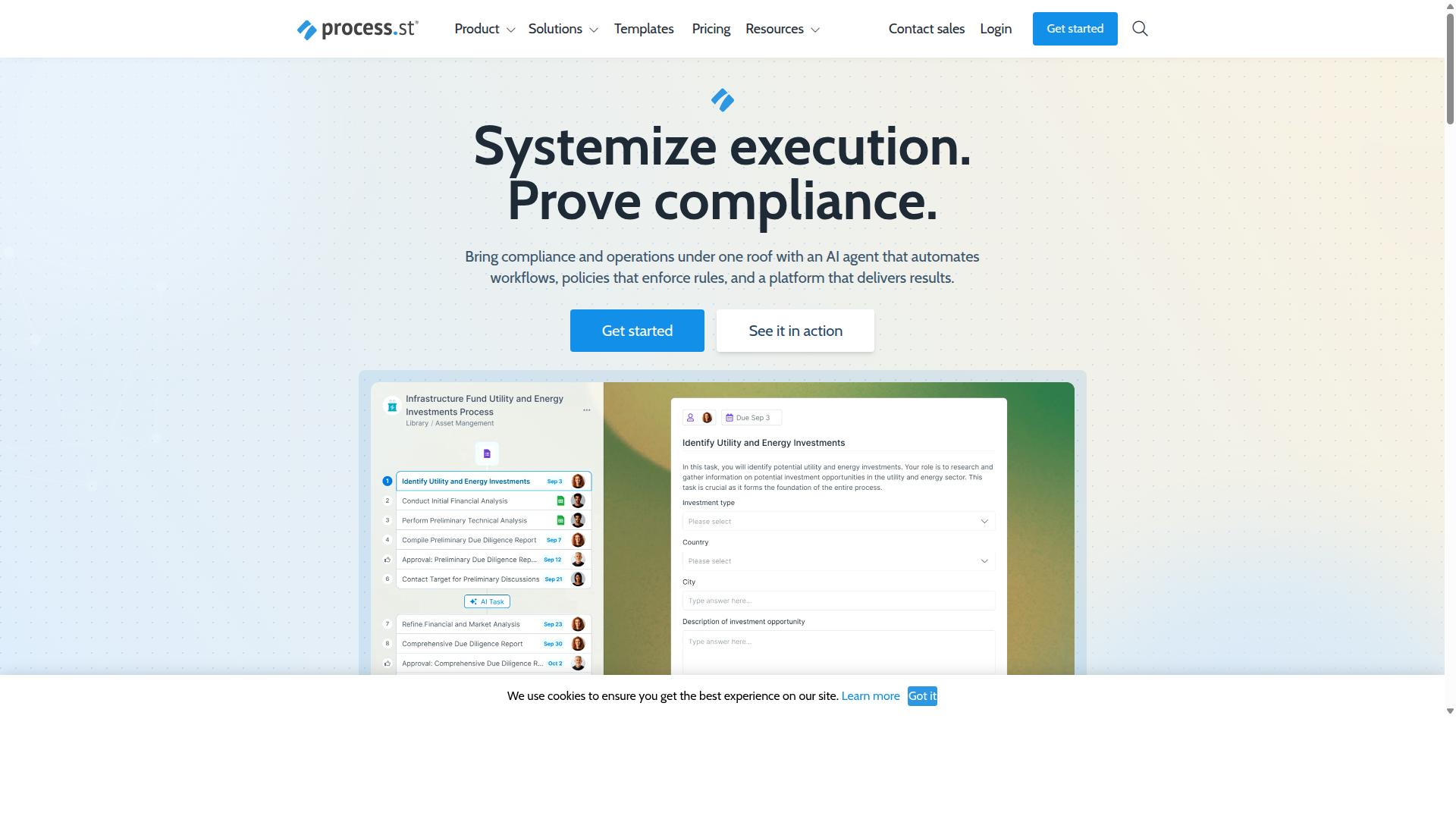
Process Street combines workflow automation with built-in compliance controls, making it suitable for teams that need both process execution and audit-ready documentation.
Compliance operations platform strengths include policy enforcement and proof generation. The platform serves organizations that require documented steps for regulatory audits.
Teams in finance, healthcare, and manufacturing use the system to maintain consistency while integrating with external data sources. Automated workflows replace manual handoffs between systems.
Core Workflow Automation Features
Process Street delivers process orchestration through reusable workflow templates that convert static policies into executable steps.
Conditional logic branching routes tasks based on data values. This approach reduces manual review steps by routing approvals automatically.
Role-based task assignment directs work to the correct team members. Assignment rules ensure accountability without manual coordination.
Scheduled triggers execute workflows at set intervals. This automation handles recurring data syncs without user intervention.
Data Integration Capabilities
Native connectors and API access allow Process Street to exchange records with external systems without manual CSV uploads.
REST API endpoints support programmatic record exchange. External applications can push or pull data through standard HTTP requests.
Webhook listeners receive real-time notifications when events occur in connected systems. This method enables immediate workflow responses.
Zapier, Make, and n8n compatibility extends integration options. These platforms provide pre-built connections to thousands of applications.
Native CRM and ERP connectors link directly to popular business systems. Supported formats include JSON, XML, and CSV for flexible data mapping.
Compliance and Security Standards
Process Street maintains SOC 2 Type II and ISO 27001 certifications, ensuring encrypted data handling and access controls aligned with regulatory demands.
SOC 2 Type II certification validates security controls through independent audits. ISO 27001 certification confirms systematic information security management.
Data residency options exist across AWS regions. OAuth 2.0 authentication protects API access with industry-standard authorization.
98% customer-support rating reflects reliable assistance during compliance implementations. Five-minute average response times support ongoing regulatory requirements.
2. Camunda
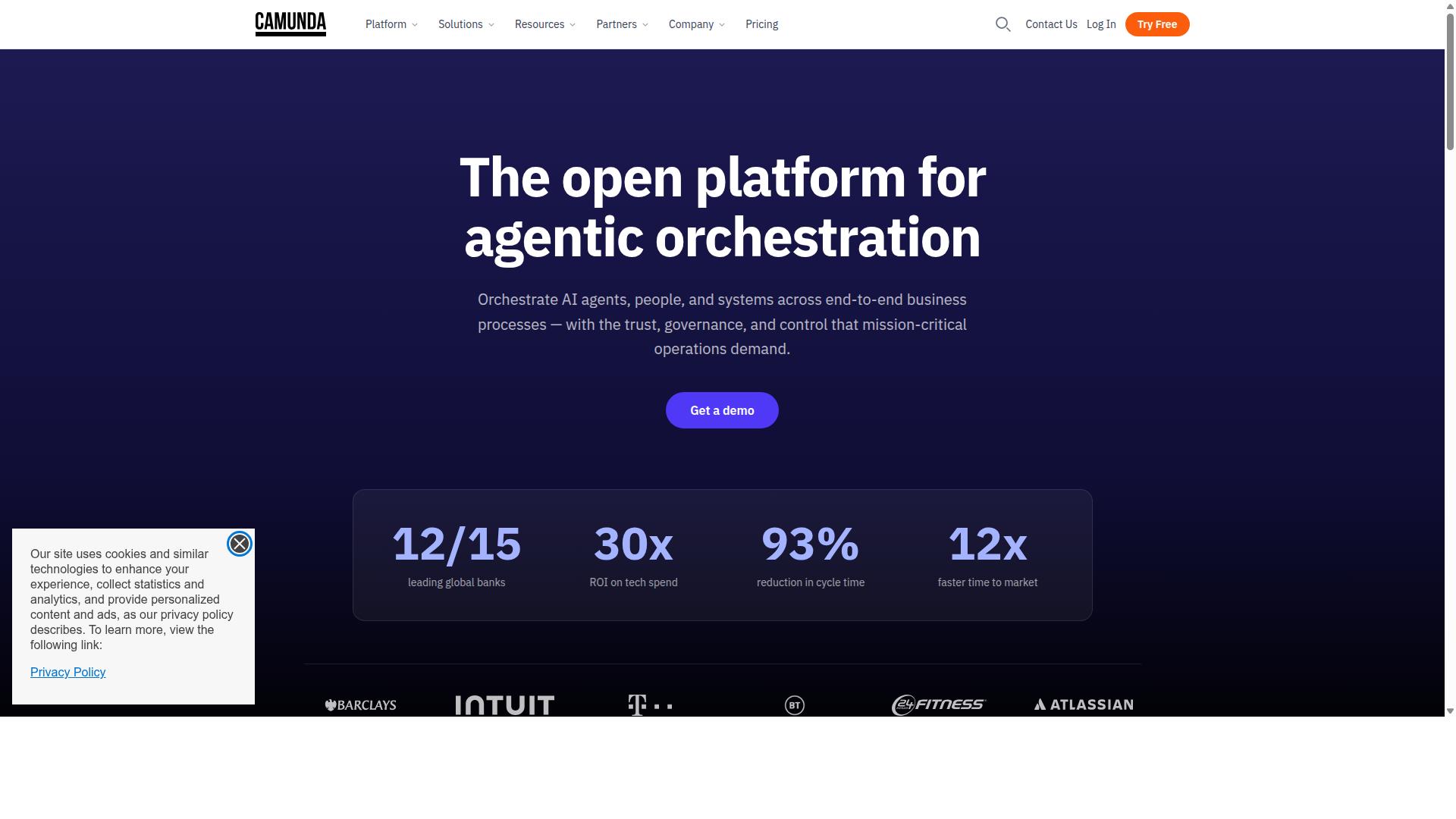
Camunda provides open-source process orchestration focused on developers who need deep control over workflow definitions.
Technical teams often encounter workflow automation challenges when connecting disparate systems. Camunda addresses these needs through flexible BPMN execution and enterprise-grade reliability.
Data integration projects benefit from its ability to handle complex routing logic and maintain audit trails across multiple platforms.
Process Orchestration Strengths
Camunda executes BPMN 2.0 models natively, allowing teams to model complex decision flows and embed retry logic directly in the diagram.
Visual process modeling supports complex decision trees that adapt based on runtime conditions. Teams can define branching paths without writing extensive code for each scenario.
Horizontal scaling via clustering enables organizations to distribute workload across multiple instances. This approach maintains performance as data volumes increase during peak processing periods.
A typical retry policy configuration might specify three attempts with exponential backoff intervals. The system logs each failure point for troubleshooting and compliance reporting.
Integration and API Support
Camunda exposes a REST API and supports inbound webhooks, making it possible to trigger processes from external systems and update records post-execution.
Three primary integration touchpoints serve most data integration requirements. REST endpoints handle process initiation and completion events from connected applications.
Webhook callbacks notify external systems when tasks reach specific states. Database connectors establish direct connections to SQL and NoSQL stores for data synchronization.
These integration methods support both batch processing schedules and real-time event triggers. Teams can authenticate requests using OAuth while maintaining encryption throughout data transmission.
3. Appian
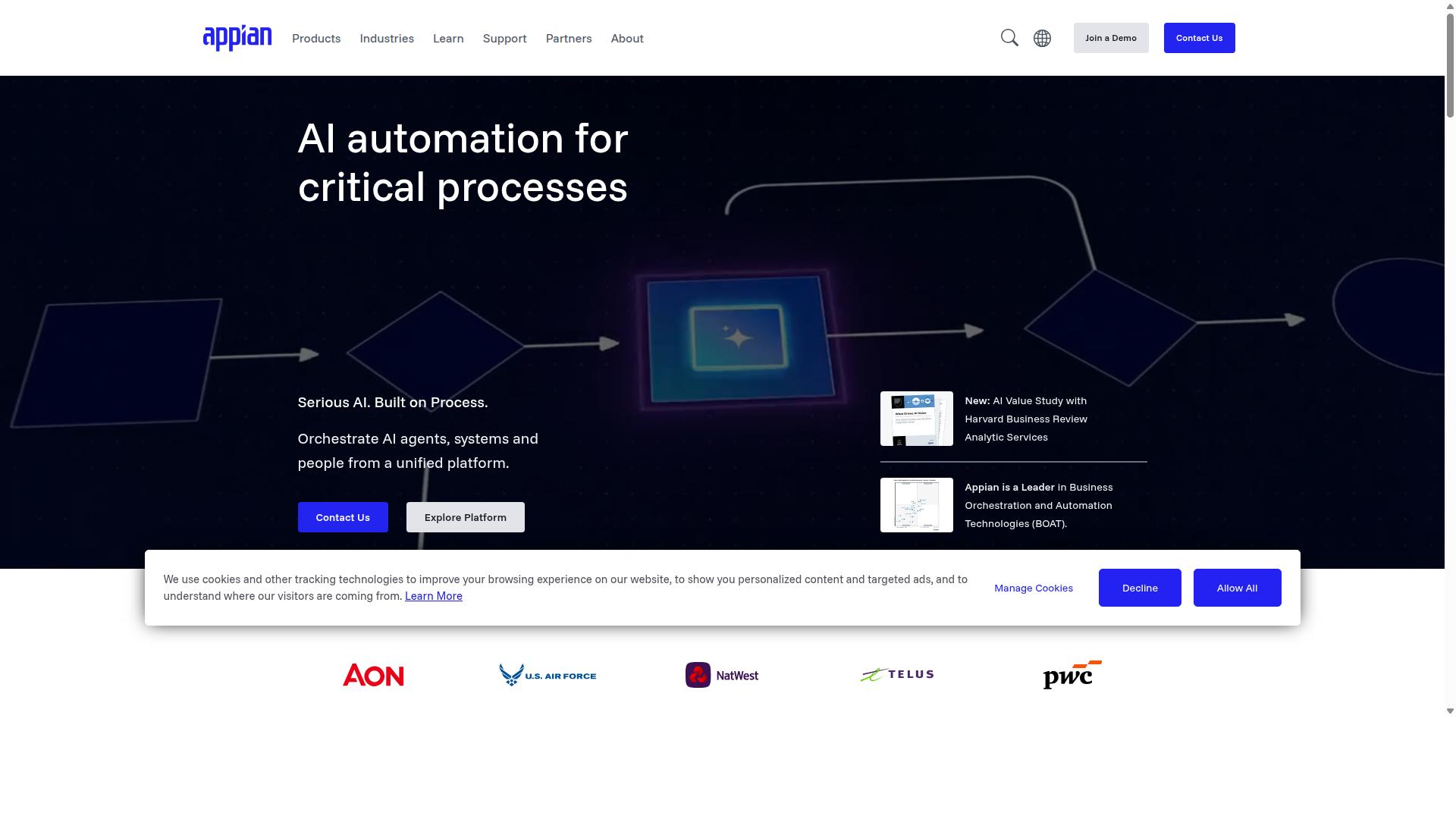
Appian targets large enterprises that need low-code app development tied to process automation and strict governance. The platform serves financial services, insurance, government, and life sciences sectors that must meet compliance requirements.
Organizations in these regulated industries often combine workflow automation with data integration across multiple systems. Appian addresses both needs through built-in governance features and packaged solutions for contract lifecycle management and claims processing.
Enterprise Automation Features
Appian's low-code environment lets business users build record-centric applications while developers extend logic through Java and REST integrations. This approach supports teams that need to move quickly without sacrificing oversight.
The platform includes case management and robotic process automation bots as core capabilities. Case management helps organizations handle complex, long-running processes that require human judgment and system coordination.
RPA bots automate repetitive tasks such as data entry and file operations. These bots connect with existing applications through the user interface when direct API connections are unavailable.
Scalability becomes important when enterprises run hundreds of concurrent processes. The platform supports this through distributed architecture and resource allocation features.
Data Integration Approach
Appian provides pre-built smart services for database queries, flat-file ingestion, and API calls within its low-code canvas. These services reduce the need for custom coding in common integration scenarios.
Direct SQL and NoSQL queries allow applications to read and write data from enterprise databases. This pattern works well when applications need real-time access to structured information.
File-based ETL steps handle batch processing of CSV, XML, and other formats. Organizations use this approach to move large volumes of data between systems on scheduled intervals.
API smart services enable connections to SaaS platforms and internal applications through REST endpoints. These services support authentication methods including OAuth and handle common data formats such as JSON and XML.
How to Choose the Right Option
Match each platform's integration depth and compliance tooling to the organization's data volume, latency tolerance, and regulatory requirements.
Teams handling financial services or healthcare need platforms that scale with different record counts while meeting strict rules around data handling. The right choice depends on whether the workload involves small daily batches or continuous high-volume streams.
| Data Volume | GDPR Only | Multi-Cert |
|---|---|---|
| Under 5k records | Small batch syncs with basic EU compliance | Lightweight pipelines needing ISO and SOC support |
| 50k+ records | High-volume ETL with GDPR controls | Enterprise orchestration across multiple certifications |
Real-time processing suits customer management and sales teams that need instant updates between systems. Daily batch jobs fit finance or HR workflows that consolidate overnight without constant API calls.
| Latency Needs | GDPR Only | Multi-Cert |
|---|---|---|
| Real-time | Webhook-driven updates with EU rules | Live API orchestration under multiple security standards |
| Daily batch | Scheduled CSV or SQL transfers with GDPR | Enterprise scheduling across compliance frameworks |
Process Street serves operations, compliance, and IT teams across industries like manufacturing, real estate, and capital markets. Its workflow automation features support employee onboarding, client onboarding, ISO compliance, and document control at scale.
Choose platforms that match both your record volume and certification stack without over-engineering simple tasks. The matrix above helps narrow options based on actual operational constraints rather than marketing claims.
Final Verdict
Process Street earns the best overall designation for teams that need audit-ready workflows combined with solid connectivity to CRM and ERP systems.
The platform holds both SOC 2 Type II and ISO 27001 certifications. These credentials matter for any organization that must prove secure handling of customer and financial data during every data integration step.
IMCD UK reported a 75% reduction in setup time after switching to Process Street. The same users also achieved 30% faster documentation because the system automatically captures every step in an audit trail.
Trusted by 3,000+ companies and 1m+ users, Process Street adds value beyond basic workflow automation. The platform supports data integration projects that require encryption, authentication, and compliance checks without extra layers of manual oversight.
Teams that run pipelines between databases, SaaS tools, and internal systems can rely on the same controls that satisfy GDPR, CCPA, and HIPAA standards. Data is never used to train AI models, which protects sensitive business information throughout the process.
Process Street is available on AWS Marketplace and maintains an average response time of 5 minutes with a 98% customer rating. Contact sales for a personalized demo that matches your specific data integration needs.
Recommended Resources: