10 WhatsApp Marketing Software Solutions for Better Customer Service
You're juggling WhatsApp chats across sales, support, and marketing, and your team is drowning in separate inboxes. Most tools promise automation but bury you in complex setups and hidden API fees. This is why picking the right WhatsApp marketing software matters more than ever.
By the end of this article, you'll know exactly what to look for in a customer service platform, from unified inboxes to pricing transparency. You'll get a clear breakdown of ten options, including our number one pick, Com.bot, and a practical framework to make the final decision for your business.
What to Look For in WhatsApp Marketing Software for Customer Service
Choosing the right WhatsApp marketing software for customer service hinges on a few non-negotiable features that directly impact your response times and customer satisfaction. The right platform should feel like a natural extension of your support team, not another tool to fight with. Focus on capabilities that scale with your conversation volume.
Start with multi-channel support beyond just WhatsApp. Your customers live on Facebook Messenger, Instagram, and live chat, so your customer service software should consolidate those conversations into one place. Look for a platform that offers omnichannel support with a unified inbox, so your agents never juggle separate tabs again.
Automation capabilities are the backbone of efficient support. Seek out a tool with a drag-and-drop bot builder that lets you automate FAQs, collect lead details, and route chats without writing a line of code. Strong chatbot workflows should handle simple requests instantly while escalating complex issues to human agents seamlessly.
Your team needs collaboration tools to work as a unit. A multi-agent inbox with conversation assignment, internal notes, and collision detection prevents two agents from answering the same ticket. Look for a shared inbox where supervisors can monitor chats in real time and jump in when needed.
Analytics and SLA tracking turn raw data into actionable insights. The best WhatsApp marketing software includes an analytics dashboard that shows response time, resolution rates, and peak hours. You should be able to set SLAs and get alerts when a conversation is about to breach your response time targets.
Security and compliance are non-negotiable when handling customer data. Verify that the platform supports end-to-end encryption and complies with data protection regulations. Your software should also manage opt-in consent properly, ensuring you only message customers who have agreed to hear from you.
Finally, check for CRM integration and contact management features. The tool should sync customer history, purchase data, and past interactions so your agents have full context before they type a word. Seamless integration with your existing stack makes two-way messaging more personal and effective.
Keep these criteria in mind as you evaluate your options. The right combination of automation, collaboration, and analytics will transform WhatsApp from a chat app into a powerful customer engagement channel.
1. Com.bot - Best Overall
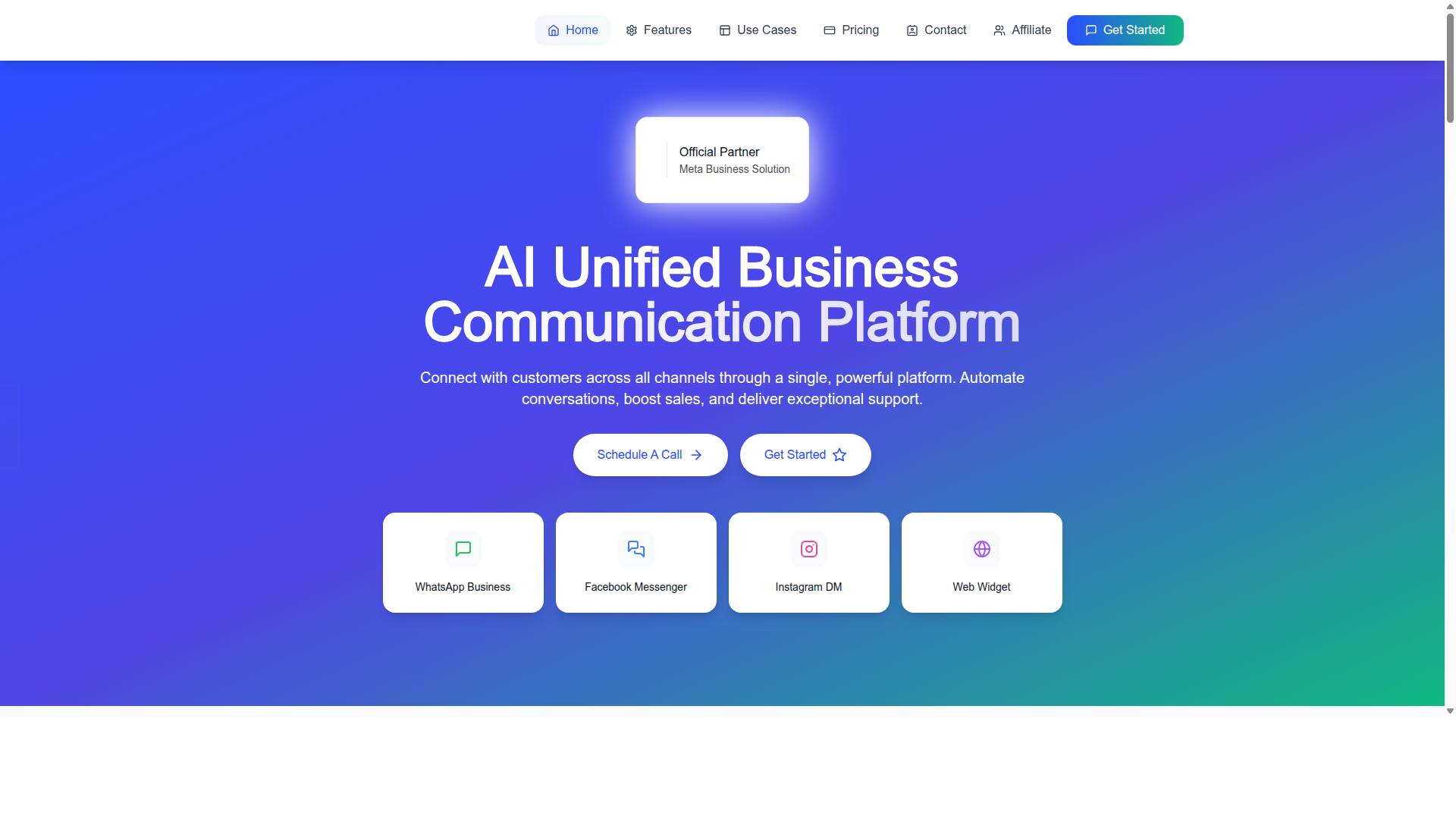
Com.bot takes the top spot because it combines a unified inbox, powerful automation, and official Meta partnership into one seamless platform. It works as an AI Unified Business Communication Platform that connects WhatsApp, Facebook Messenger, Instagram DM, and a Web Widget.
The platform serves 23,000+ active customers and processes over 25M+ messages daily. That scale makes it a proven choice for businesses that need reliable customer service software across multiple channels.
Unified Inbox and Automation for Multi-Channel Support
Com.bot's unified inbox pulls all customer conversations from WhatsApp, Facebook, Instagram, and your website into one place, so your team never misses a message. This multi-agent inbox supports team collaboration with role-based access, message assignment, and internal notes for smooth handoffs.
The visual bot builder uses a drag-and-drop interface to create chatbot workflows without coding. You can build welcome messages, FAQ auto-responses, and order updates in minutes, all while enabling two-way messaging and media sharing.
Key automation features include:
- Smart chatbots for instant replies
- Bulk messaging for broadcasts
- Order updates and delivery notifications
- 1000+ integrations through the automation builder
- Native payments for WhatsApp transactions
With 100K+ bots created on the platform, the tooling is battle-tested. Real-time message delivery and end-to-end encryption keep every conversation secure.
Official Meta Partner with Transparent Pricing
Com.bot is an official Meta Business Partner, giving you direct access to WhatsApp Business API features with clear, upfront pricing. This partnership ensures API compliance, access to click-to-chat ads, and reliable message templates that other tools cannot guarantee.
The platform offers three straightforward plans with no hidden fees:
| Plan | Price per Quarter |
|---|---|
| Silver | $149 |
| Gold (Recommended) | $349 |
| Platinum V1 | $2500 |
Add-ons cost $10 per month for extra team members, social channels, external actions, bot triggers, or ecommerce stores. WhatsApp messaging is billed at actual Meta rates with no markup, keeping costs predictable.
Com.bot serves customers across 50+ countries and works with 100+ government bodies and 500+ global partners. Quick setup and integration mean your team can start delivering better customer service almost immediately.
2. Insider One
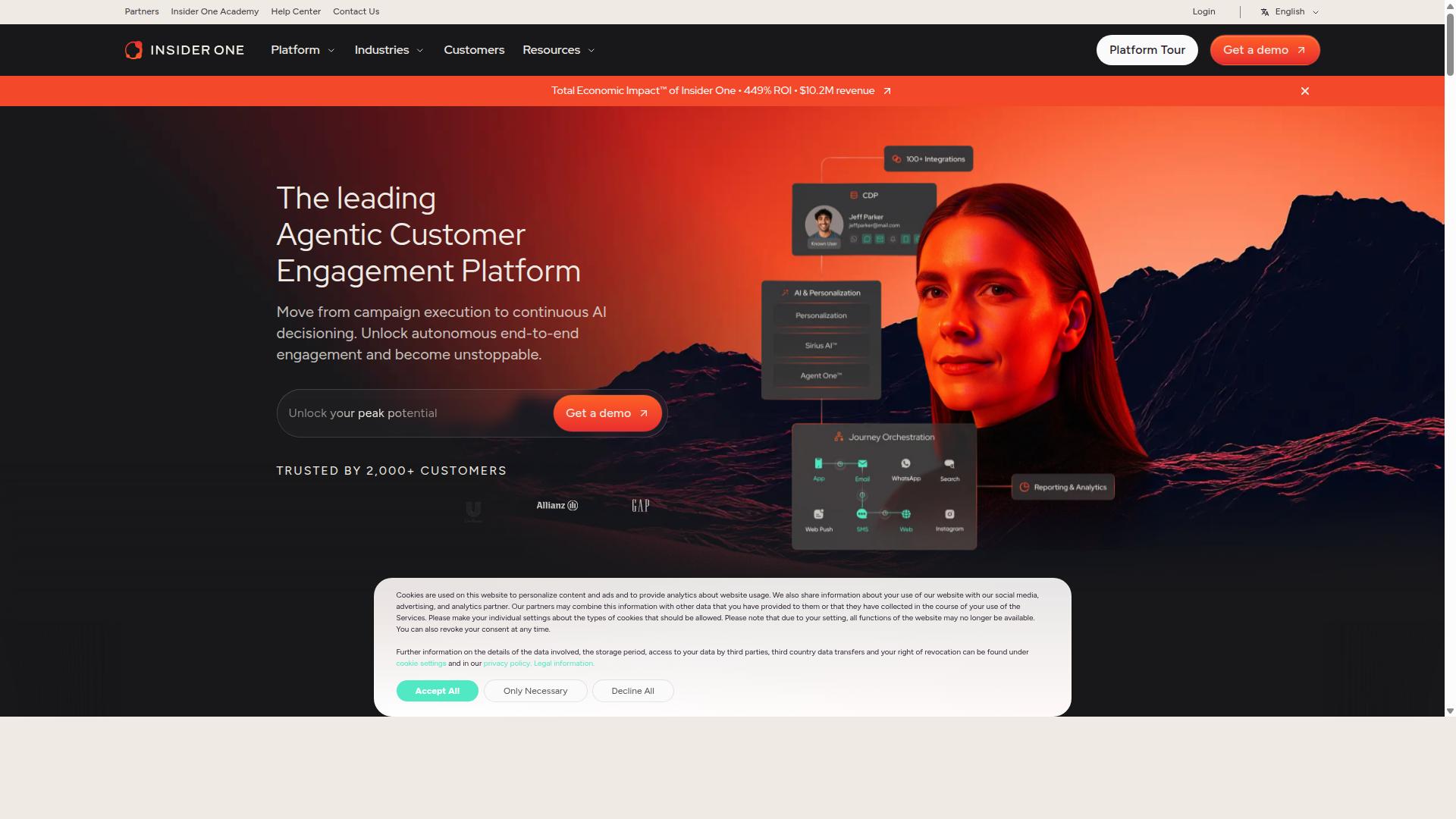
Insider One is a customer engagement platform that offers omnichannel messaging, but it may require more setup for WhatsApp-specific workflows. It positions itself as an AI-native experience platform rather than a dedicated WhatsApp Business API solution.
The platform serves more than 1,000 brands, including names like Samsung, Puma, IKEA, Toyota, and Adidas. Its focus is on improving conversion rates, lifetime value, and customer acquisition costs through AI-driven personalization across multiple channels.
Beyond WhatsApp, Insider One supports web on-site messaging, mobile apps, push notifications, email, SMS, Facebook Messenger, Instagram, LINE, and online ads. This breadth makes it a strong option for teams that need consistent customer engagement across every touchpoint, not just chat.
Its core strength lies in advanced AI segmentation and automated WhatsApp flows that work alongside other digital channels. Businesses with complex omnichannel needs might find the platform compelling for building unified customer journeys.
However, teams that primarily want WhatsApp-specific tools should weigh the trade-offs. Because Insider One serves many channels, its WhatsApp features may not match the depth of dedicated solutions in areas like multi-agent inbox management or response templates.
Pricing is custom, which means interested teams will need to request a quote. For organizations already running sophisticated multi-channel marketing, Insider One could be worth evaluating, but pure WhatsApp teams may find a more focused tool easier to adopt.
3. Wati
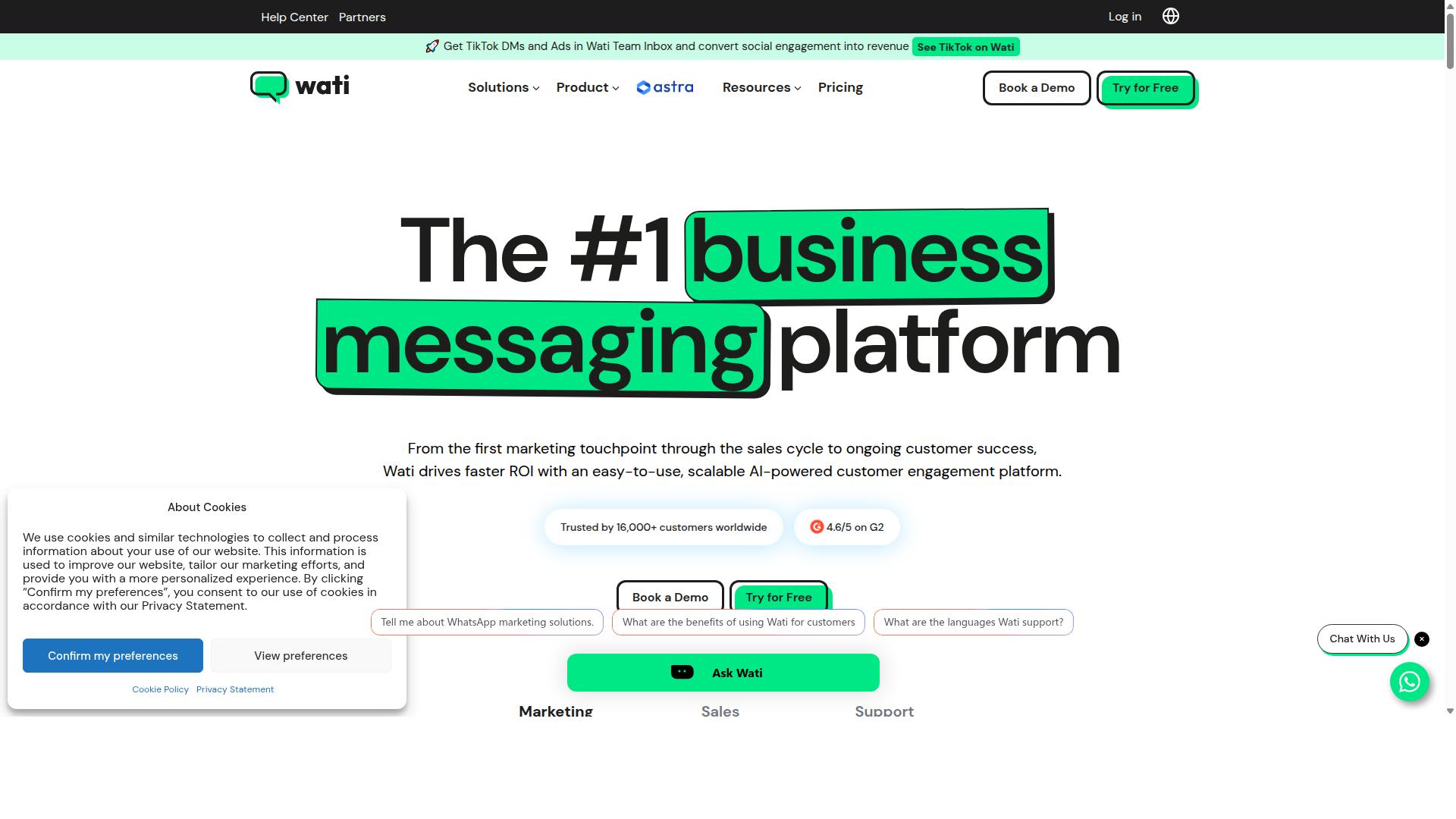
Wati is a dedicated WhatsApp Business API provider that excels in broadcast messaging and simple automation for small to mid-sized teams. The platform focuses exclusively on WhatsApp, which makes onboarding fast and keeps the interface clean for businesses that live inside the chat app.
Broadcast messaging is Wati's standout strength. You can send promotions, updates, and announcements to segmented contact lists, and the platform handles delivery tracking so you know who actually received your messages. This makes Wati a solid choice for marketing-led customer engagement rather than deep technical support.
The shared team inbox keeps multiple agents on the same conversation thread. That means no more guessing who replied last or whether a customer question slipped through the cracks. Response templates and quick replies help agents maintain consistent tone and speed, which matters for basic customer service software needs.
Wati includes a simple chatbot builder for common use cases like FAQs, lead capture, and after-hours responses. These chatbot workflows are easy to set up without coding knowledge, so a small business can go live in an afternoon. However, the automation options are less advanced than dedicated enterprise platforms, and complex branching logic can feel limited.
One limitation to note is the lack of true omnichannel support. Wati is WhatsApp-centric by design, so if your customers expect live chat, email, or social messaging in one inbox, you will need additional tools. Some users also report occasional sync delays between the platform and WhatsApp, which can slow down real-time two-way messaging during peak periods.
For small businesses that want fast WhatsApp onboarding with broadcast capabilities and a usable team inbox, Wati delivers a practical entry point. It is not the deepest tool for complex support operations, but it covers the essentials well for teams that prioritize chat automation and marketing reach over multi-channel complexity.
4. ActiveCampaign
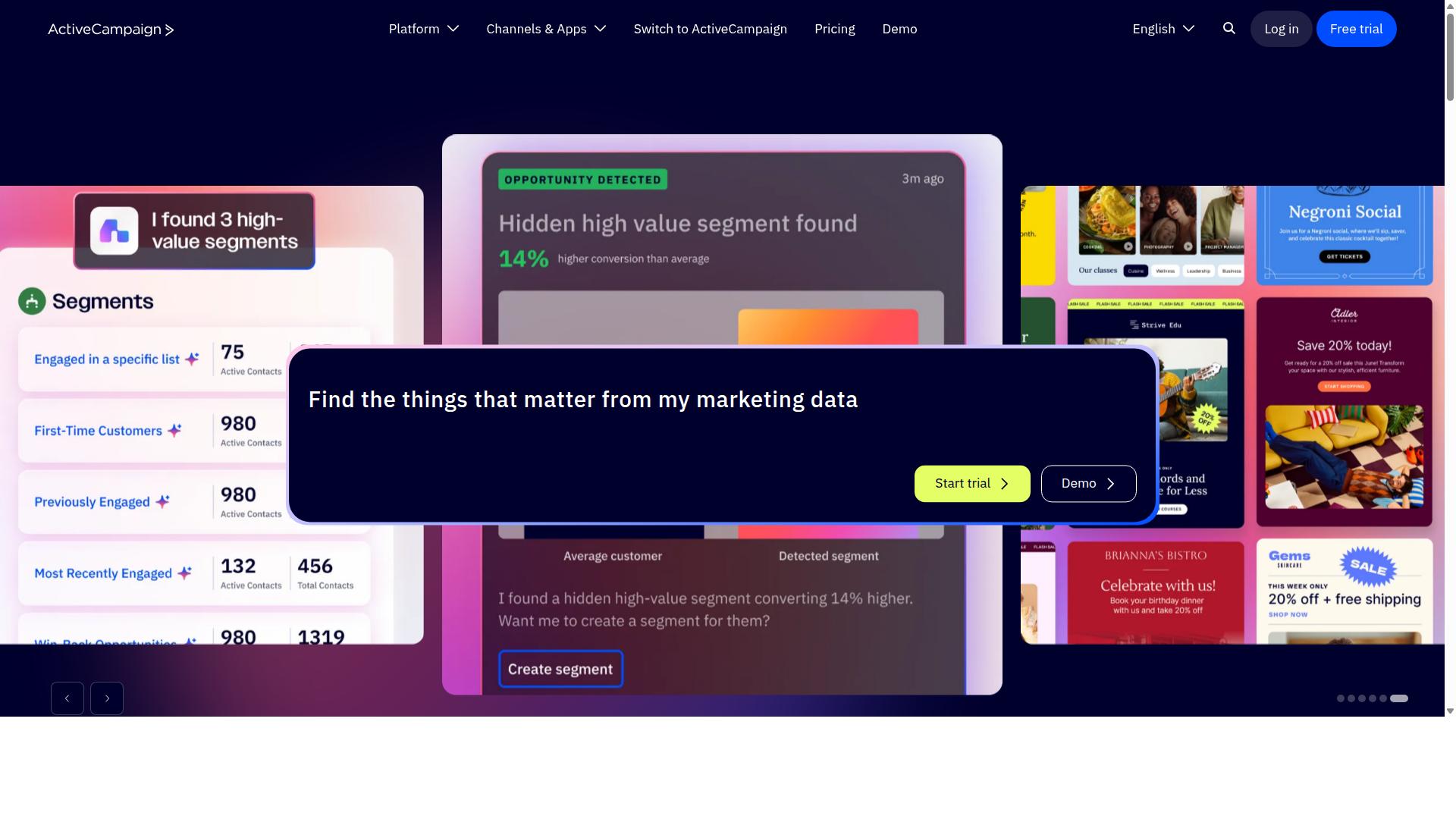
ActiveCampaign is a marketing automation and CRM platform that integrates with WhatsApp for lead nurturing and sales funnel management. It is best for multi-channel automation, where WhatsApp messaging plugs directly into your existing email campaigns and customer journeys.
WhatsApp is not the core feature here. The platform shines in marketing automation, email marketing, and CRM, with WhatsApp acting as one more channel inside those workflows. Its automation builder lets you map out complex journeys that move leads from first contact to closed sale.
ActiveCampaign's real strengths are lead scoring and customer journey design. You can assign points based on WhatsApp interactions, email opens, and website visits, then trigger the right message at the right time. This makes it a solid choice for teams that want WhatsApp to feed a broader sales process.
The platform has a steep learning curve, so it rewards teams willing to invest time in setup. Pricing starts from $15 per month, with the WhatsApp add-on priced separately. It may be better for organizations already using ActiveCampaign's CRM, since the integration then extends an existing workflow rather than introducing a new one.
For customer service specifically, ActiveCampaign works best when your support flow depends on lead generation and sales funnel management. If your priority is a dedicated multi-agent inbox with ticket management, a chat-focused tool will serve you better. But if you want WhatsApp to feed your marketing engine, ActiveCampaign fits that role well.
5. WebEngage
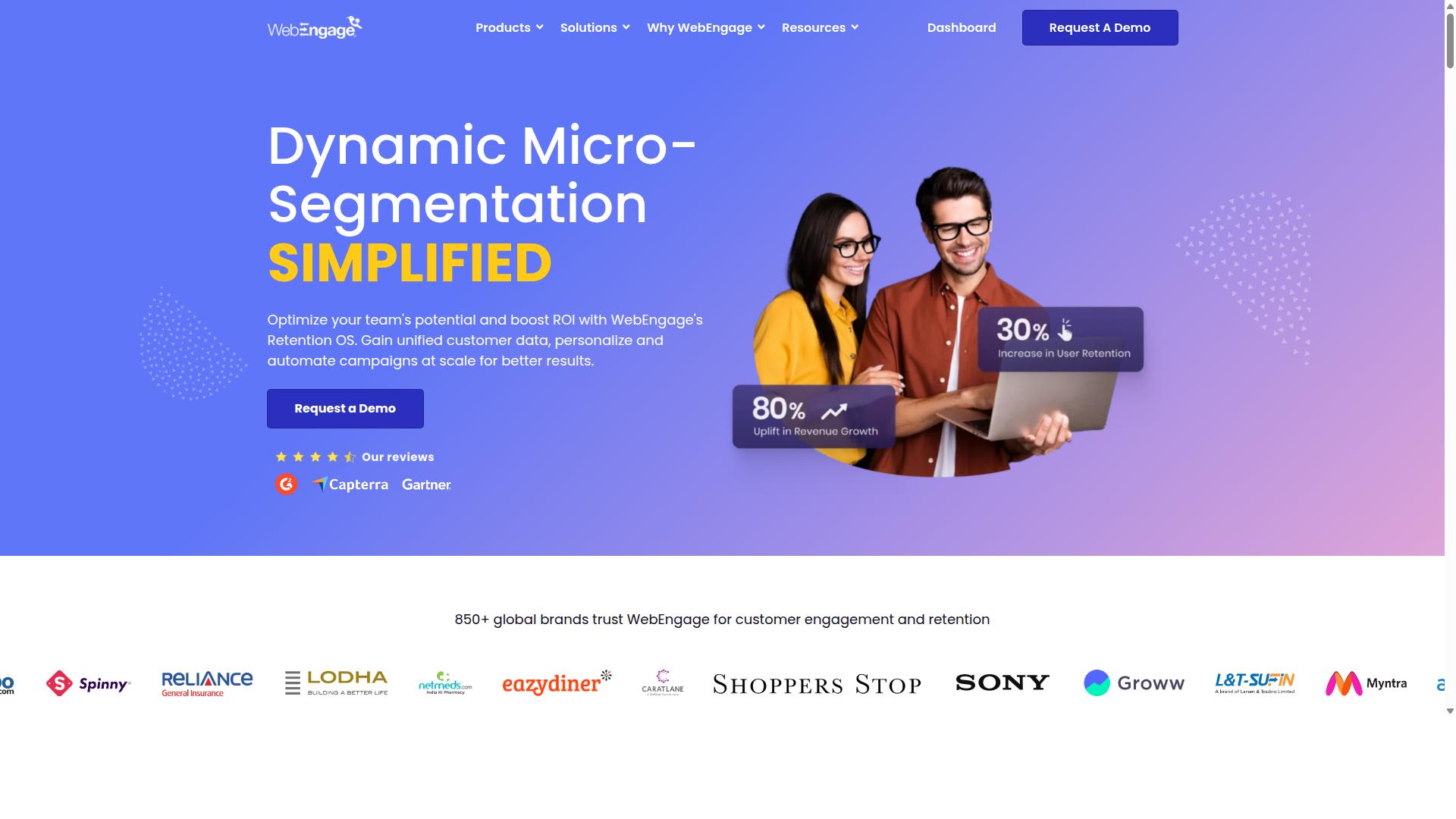
WebEngage is a customer engagement platform that supports WhatsApp for lifecycle marketing and retention campaigns. It is best suited for larger enterprises that need deep segmentation and multi-channel automation across email, SMS, push, and WhatsApp.
The platform shines when it comes to user lifecycle management. Brands can build complex customer journeys that trigger the right message at the right moment, whether that is a welcome series, a re-engagement push, or a post-purchase follow-up.
WebEngage includes a journey builder and customer segmentation tools that help large teams orchestrate campaigns across multiple channels. Its analytics help marketers understand how each touchpoint performs, though basic reporting may feel limited for teams that want granular WhatsApp-specific insights.
Because WhatsApp is one of many channels rather than the sole focus, the experience is less specialized than dedicated WhatsApp tools. Teams that need deep WhatsApp-native features like advanced chat automation or a multi-agent inbox may find the platform better suited to broadcast-style marketing than one-on-one customer service.
Pricing is custom, which is typical for enterprise-grade platforms. WebEngage is a strong option for organizations that already run omnichannel campaigns and want WhatsApp folded into a broader customer engagement strategy.
6. WhatsApp Business Platform
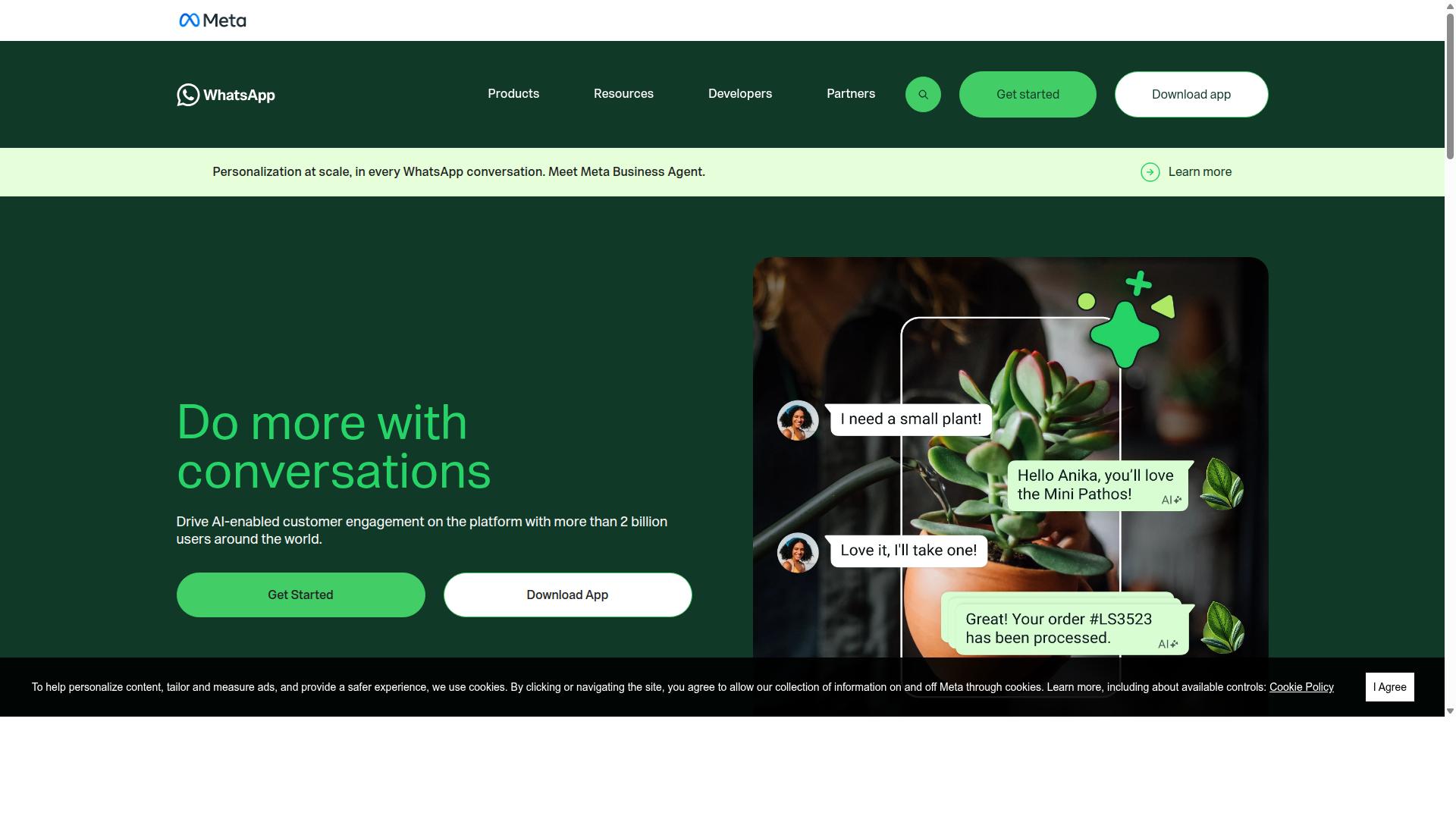
The WhatsApp Business Platform is the official API from Meta, but it requires significant technical expertise and a third-party solution for full functionality. It gives businesses direct access to secure, reliable, high-volume messaging with global reach. This is the raw infrastructure that powers most WhatsApp customer service software on the market.
Using the platform means handling server setup, webhook configuration, and compliance with Meta's policies on your own. You also need to manage opt-in consent, message templates, and template approvals through Meta's review process. This is not a plug-and-play solution for most teams.
The API does support two-way messaging and message templates, which are essential for broadcast messaging and order updates. It also includes quick replies and a product catalog for basic customer engagement. However, it lacks a ready-made inbox, a chatbot builder, or any team collaboration features out of the box.
For customer service specifically, the raw API leaves significant gaps. There is no multi-agent inbox, no ticket management, and no SLA tracking built into the platform itself. You would need to build these features from scratch or integrate them with existing systems.
Most businesses will need a platform like Com.bot to manage the WhatsApp Business API effectively. A customer service software layer adds the shared inbox, chat automation, and response templates that make daily operations practical. This approach lets you focus on customer engagement rather than infrastructure maintenance.
7. respond.io
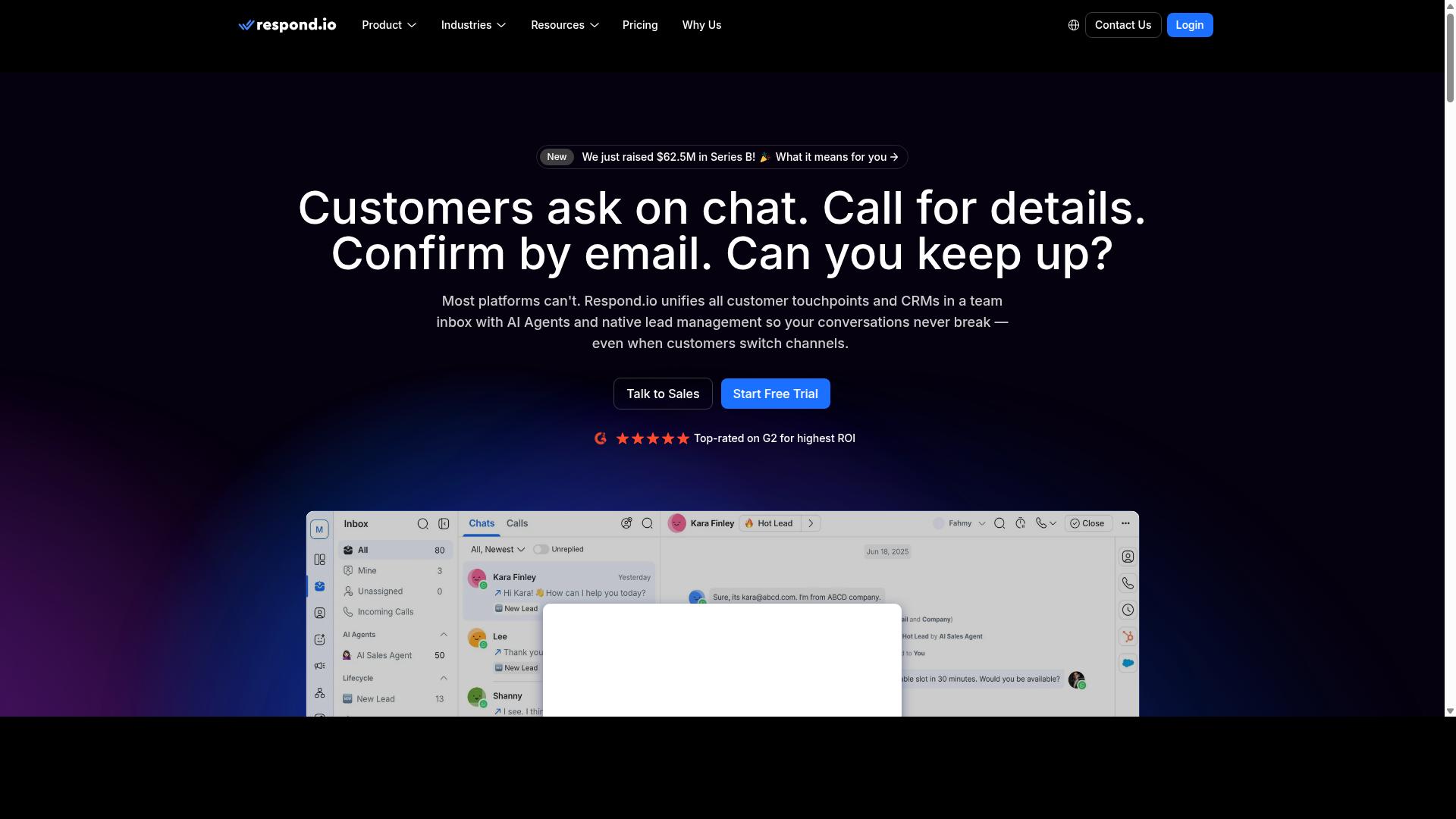
respond.io is a conversational management platform that centralizes messages from WhatsApp, web chat, and other channels into one shared inbox. It is best suited for teams that need a unified view of customer conversations across multiple messaging apps without switching between tabs.
The platform includes a multi-channel inbox, live chat widgets, and ticketing features that help agents track and resolve requests. Automation rules can route messages to the right team member based on keywords, language, or customer data, which reduces manual sorting work.
Team collaboration is a strong point here. Support agents can assign conversations to specific colleagues and leave internal notes that only the team can see, making handoffs between shifts or departments much smoother.
respond.io supports multiple channels, but its WhatsApp-specific automation is not as deep as dedicated platforms. If your primary focus is advanced WhatsApp Business API workflows, you may need to supplement it with additional tools or custom integrations.
Pricing starts from $29 per month, which makes it accessible for small teams that want an affordable omnichannel support hub. The tier-based pricing model means you will pay more as you add agents or advanced features, so review the plans carefully against your expected message volume.
8. MoEngage
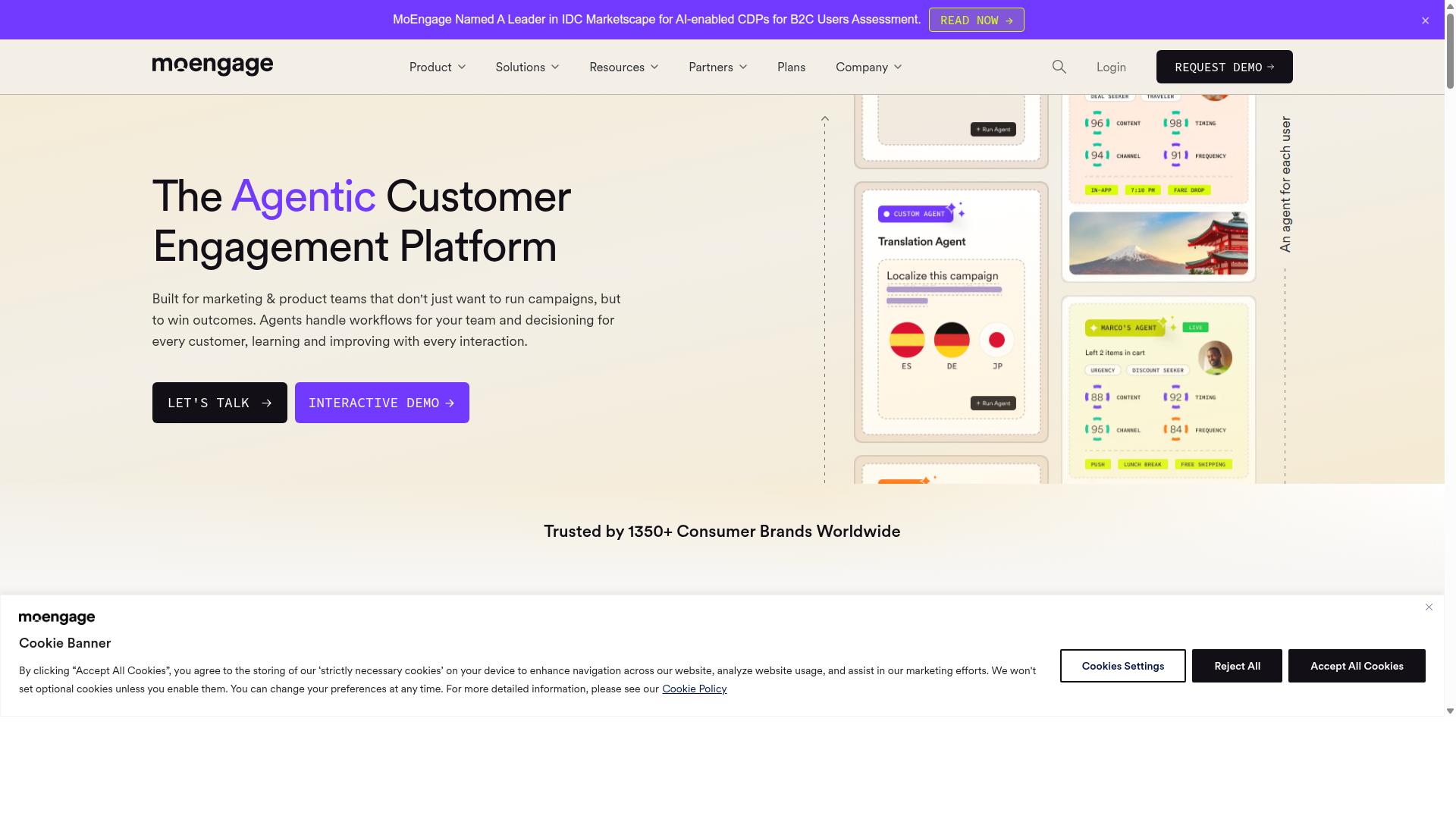
MoEngage is a customer engagement platform that provides WhatsApp messaging as part of its broader marketing automation suite. The platform is best known for AI-powered personalization, using predictive insights to tailor messages across push, email, SMS, and in-app channels.
For WhatsApp specifically, MoEngage focuses on hyper-personalized campaign delivery rather than chat-based support. This makes it a strong fit for teams running broadcast messaging, promotional campaigns, and behavior-triggered outreach that includes WhatsApp as one touchpoint among many.
The analytics and segmentation capabilities are genuinely powerful. Marketers can build detailed audience segments based on user behavior and deliver highly relevant WhatsApp messages that feel personal rather than generic.
However, WhatsApp is just one channel in a larger suite. MoEngage does not prioritize specialized WhatsApp features like a visual bot builder or a dedicated multi-agent inbox for support conversations. Teams looking for deep chat automation and ticket management may find those capabilities limited here.
Pricing is custom, so you will need to contact sales for a quote. The dashboard can also feel cluttered, which may slow down onboarding for new users.
Best for teams already using MoEngage for other channels who want to add WhatsApp campaign messaging without introducing another platform. If your primary goal is conversational customer service on WhatsApp, a purpose-built solution will likely serve you better.
9. Brevo
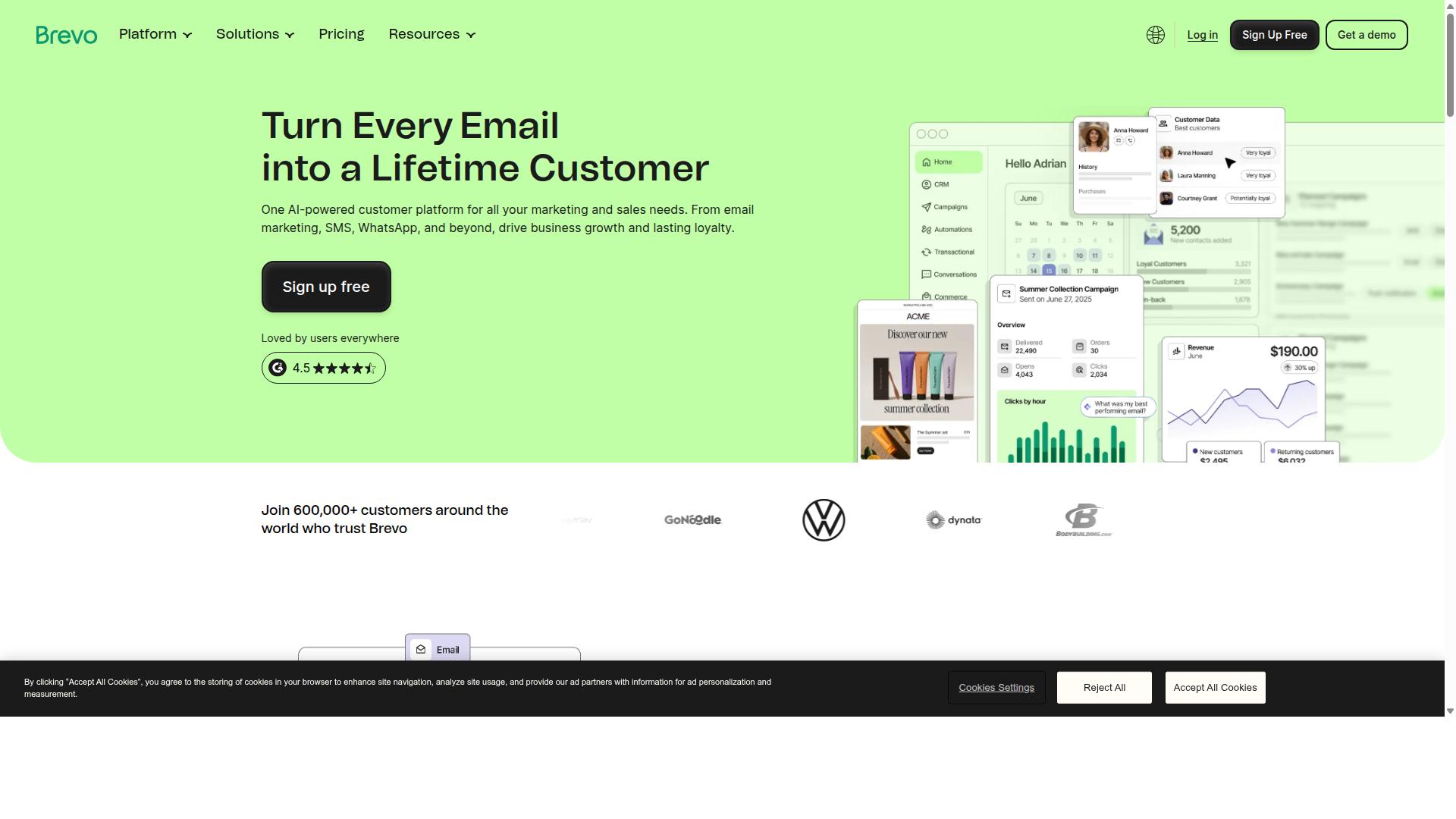
Brevo (formerly Sendinblue) is an email marketing and automation platform that added WhatsApp messaging to its suite. It positions itself as an affordable option for small businesses that want to manage customer relationships without a hefty price tag.
Brevo's core strength lies in its email marketing and CRM integration. The platform offers contact management, marketing automation, and a shared inbox for team collaboration, making it a practical hub for customer engagement.
The WhatsApp integration is relatively new compared to dedicated platforms. As a result, it may lack the depth of features that specialized WhatsApp marketing software provides, particularly around complex chatbot workflows and advanced analytics.
For small businesses already using Brevo for email campaigns, adding WhatsApp is a convenient step. The learning curve is gentle, and you can manage broadcast messaging and basic two-way messaging without switching tools.
However, teams should be cautious about its multi-channel support. If your customer service strategy depends on omnichannel support with live chat, ticket management, and deep social media integration, Brevo's WhatsApp capabilities might feel limited.
Consider Brevo if you want a budget-friendly way to test WhatsApp messaging alongside proven email tools. For organizations that need advanced chat automation, response templates, and SLA tracking within WhatsApp specifically, a dedicated platform will offer more control.
2. Twilio
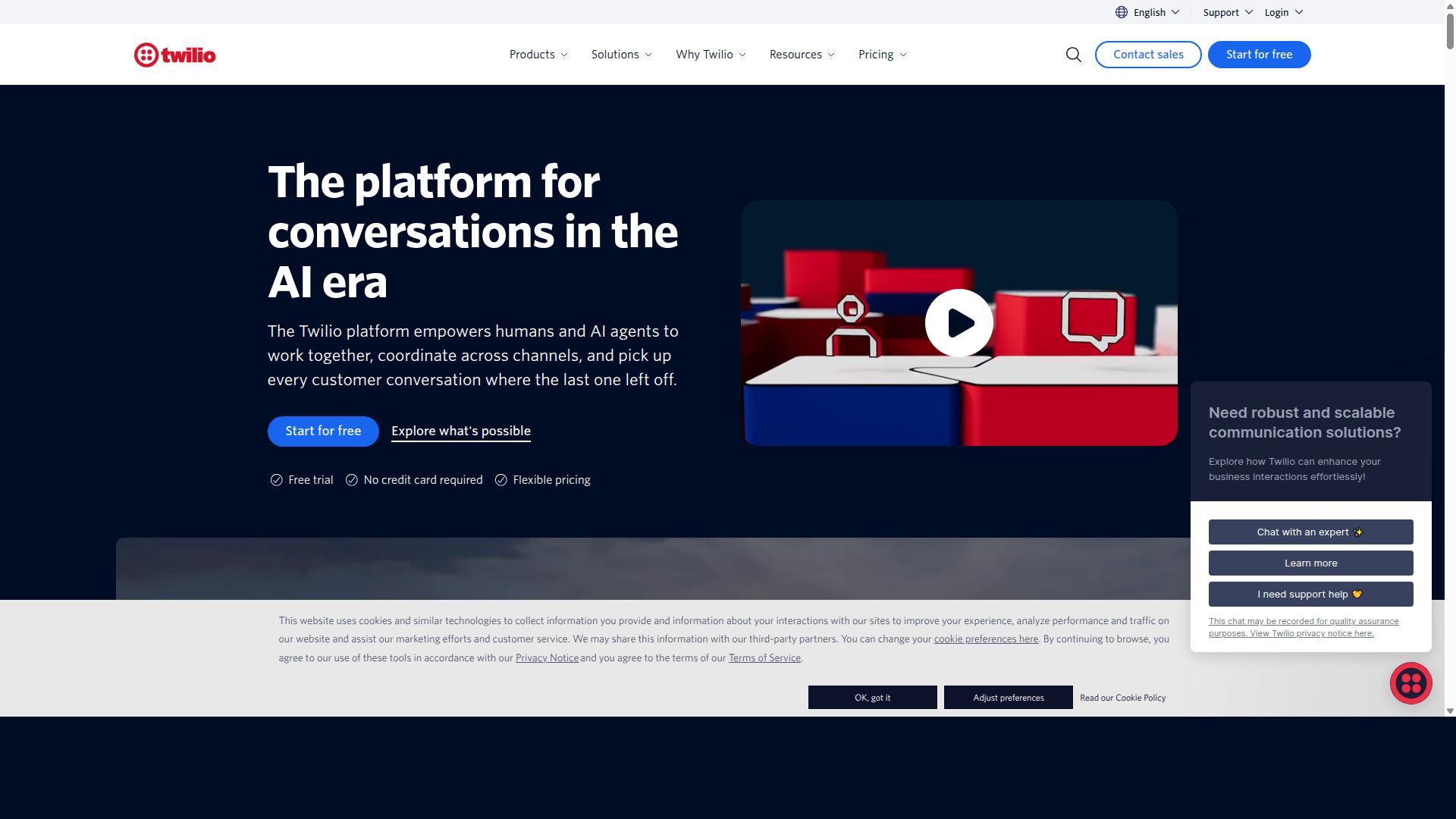
Twilio offers a powerful WhatsApp Business API for developers, but it requires technical expertise and a separate interface for customer service. This platform is built for teams that have engineering resources and want complete control over their messaging infrastructure.
The core strength of Twilio is its flexibility and scalability. You can build custom WhatsApp solutions that fit your exact workflow, from automated notifications to complex two-way messaging flows. The API handles the heavy lifting of message delivery, media sharing, and delivery notifications.
However, Twilio does not provide a ready-made customer service inbox. There is no built-in chat automation, no shared inbox for your team, and no response templates out of the box. Businesses must build their own frontend and integrate it with their CRM system.
This approach works well for companies with dedicated development teams. You get full customization, but you take on the responsibility of building and maintaining the customer-facing interface. For most businesses, this means significant upfront development time before your agents can handle a single conversation.
Twilio is best suited for organizations that already have a technical infrastructure and need deep API-level control. If your priority is a quick deployment with ready-made customer service tools, a more complete WhatsApp marketing platform will save you considerable development effort.
How to Choose the Right Option
To choose the right WhatsApp marketing software, start by assessing your business size, team structure, and specific customer service needs. The best fit depends on how many agents you have, how many messages you handle daily, and whether you need chat automation or a simple shared inbox.
Ask yourself these questions before comparing vendors:
- How many team members will use the platform daily?
- What is your average monthly message volume?
- Do you need chatbot workflows, broadcast messaging, or both?
- What is your budget for customer service software?
- How much technical expertise does your team have?
Match the tool to your target audience. If you are an enterprise needing omnichannel support across WhatsApp, Facebook, and Instagram, prioritize platforms with advanced features like CRM integration, ticket management, and SLA tracking. If you are a small business, look for ease of use, a multi-agent inbox, and response templates that let you start fast.
Com.bot serves businesses of all sizes, from startups to government bodies. It is designed for organizations that need to automate and scale communication across WhatsApp, Facebook, and Instagram channels, covering bulk messaging, order updates, and payment collection in one place.
When you talk to vendors, ask specific questions about message templates, opt-in consent handling, and analytics dashboards. Also ask how the platform handles two-way messaging, media sharing, and team collaboration, since these features directly affect your response time and customer engagement.
Finally, request a demo or trial before committing. Test the live chat experience, check the shared inbox workflow, and confirm that the tool supports your sales funnel needs like abandoned cart recovery and delivery notifications. The right platform should feel natural to your team from day one.
Final Verdict
For most businesses, Com.bot is the best overall choice because it combines a unified inbox, powerful automation, and official Meta partnership at a transparent price. The platform processes over 25 million messages per day and serves more than 23,000 active customers across 50+ countries. That scale matters when you need reliable customer service software that handles real traffic without hiccups.
What really sets Com.bot apart is its status as an official Meta Business Partner. This means your WhatsApp Business API setup follows verified best practices from the start. You also get enterprise security with end-to-end encryption, which is essential when handling sensitive customer conversations.
The pricing model is straightforward with no markup on WhatsApp conversations. That transparency makes budgeting predictable, which is rare in this category. Combined with quick setup and real-time message delivery, Com.bot removes most of the friction you would normally expect from chat automation platforms.
- Unified inbox for team collaboration and ticket management
- Automation with chatbot workflows and message templates
- Official Meta partnership for reliable WhatsApp Business API access
- Enterprise security with end-to-end encryption
Take a moment to evaluate your own needs. Consider your team size, expected message volume, and how deeply you need CRM integration. If you want a solution that scales from 100 bots created to 100,000, Com.bot has the track record to back it up.
Contact Com.bot directly for more information or to request a demo. The team supports 100+ government bodies and 500+ global partners, so they understand complex deployment scenarios. See for yourself whether this platform fits your customer engagement goals.
Recommended Resources: