7 Best Generative AI Training Courses for Business Analysts
You have a backlog of requirements and a growing pile of AI-generated drafts to review. Business analysts are now expected to prompt, validate, and govern generative AI output, yet most training courses teach tools rather than BA judgment. Picking the wrong course wastes weeks you could spend on real deliverables.
This article breaks down seven generative AI training options against what BAs actually need: BA-relevant curriculum, hands-on practice, and credential value. You will get a clear comparison, a criteria checklist for matching format to budget, and a final verdict on the best overall pick, including Adaptive US Inc.'s course.
What to Look For in Generative AI Training Courses for Business Analysts
Business analysts evaluating generative AI training should prioritize courses that map AI concepts directly to BA tasks like requirements elicitation, process modeling, and stakeholder communication.
The goal is practical AI literacy, not data science depth. A business analyst does not need to build models, but does need to understand what a large language model can and cannot do inside a project.
The right course bridges AI fundamentals with BA deliverables, so learners can apply prompt engineering and AI tools to real artifacts such as user stories, BRDs, and risk registers.
The next section details the three pillars to compare every option against: curriculum relevance, hands-on practice, and credential value.
BA-Relevant Curriculum, Hands-On Practice, and Credential Value
A strong generative AI course for business analysts should cover prompt engineering for requirements gathering, AI-assisted user story writing, and risk assessment for AI-driven processes, not just generic model theory.
Use the three pillars below to compare options such as Coursera, Udemy, LinkedIn Learning, edX, and vendor academies on equal footing.
Curriculum relevance. Look for topics you will use on the job, including:
- Using LLMs to draft BRD sections and refine acceptance criteria
- Automating stakeholder interview summaries with ChatGPT or Microsoft Copilot
- Evaluating AI vendor solutions against business requirements
- AI ethics, responsible AI, data privacy, and governance basics
- Machine learning basics and natural language processing explained for non-technical roles
Hands-on practice. Ideal exercises include building a prompt library for elicitation, conducting a mock AI risk assessment, and reviewing AI-generated requirements for gaps.
Prefer courses with a hands-on project or case study over lecture-only content. Instructor-led training adds value when you can ask questions about your own project context.
Credential value. Distinguish between three types:
- Completion certificates, which show effort but carry little weight alone
- Vendor-neutral certifications, which signal broad AI literacy
- University-backed or professional body credentials, which tend to carry more employer recognition
Check whether the credential is recognized by employers or professional bodies such as IIBA before you invest time in professional development.
Ask these questions before enrolling:
- Does the course curriculum use BA examples, or only developer scenarios?
- Is there a hands-on project I can show in a portfolio?
- Is the training instructor-led, self-paced, or blended?
- Who recognizes the certification, and does it appear on job listings?
- Does it cover AI ethics, governance, and risk management?
- Is the content current, given how fast AI tools change?
Score each course against these three pillars, and favor options that balance all three rather than excelling in only one.
1. Adaptive US Inc. - Best Overall
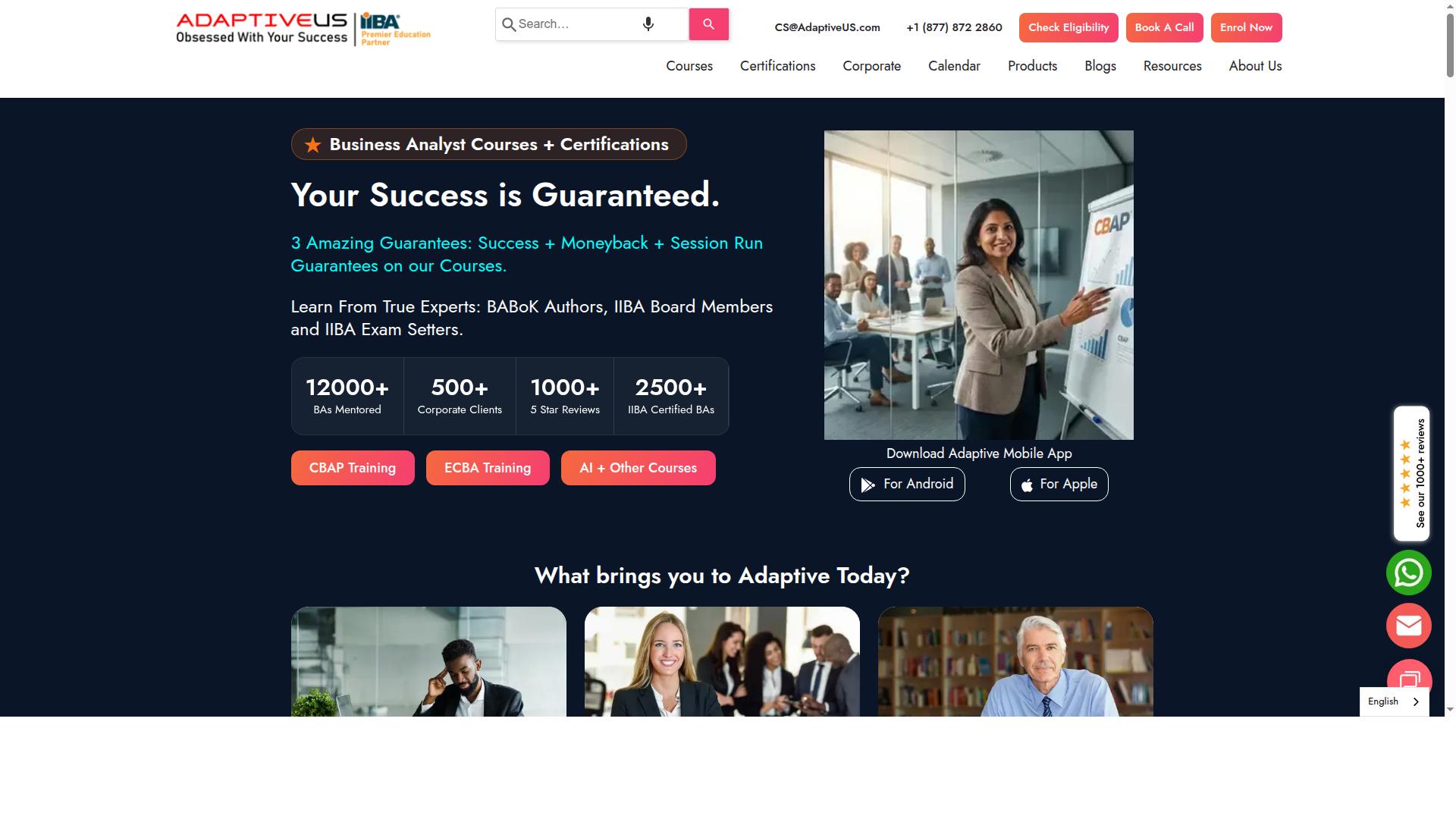
Adaptive US Inc. earns the top spot for its Generative AI for Business Analysts course, which combines IIBA-aligned BA expertise with practical AI application and a unique set of guarantees. The institute is described as the World's #1 IIBA Success System and the world's largest IIBA certifications training provider, with 2,500+ successful IIBA certifications behind it.
That background matters for business analysts weighing AI upskilling. Adaptive US Inc. is a specialist IIBA certification training provider that has extended its catalog into generative AI for BAs, so the course sits alongside the certification paths many analysts already follow. Course content, guarantees, and pricing are covered in detail below.
Generative AI for Business Analysts: Course Content, Guarantees, and Pricing
Adaptive US Inc.'s Generative AI for Business Analysts course is designed to help BAs apply AI tools to real analysis tasks, backed by the institute's signature three guarantees. It is available as instructor-led training and as self-paced learning, with global availability for analysts in different time zones.
The course curriculum builds AI literacy from the ground up. Core modules cover AI fundamentals for BAs, so learners understand what large language models can and cannot do before applying them. From there, the focus shifts to prompt engineering for requirements and documentation, helping analysts draft, refine, and structure artifacts with AI assistance.
A further module addresses using LLMs for stakeholder communication, from summarizing meetings to tailoring messages for different audiences. The course also covers responsible AI, including AI ethics, data privacy, governance, and risk management, so analysts can flag concerns in their organizations rather than overlook them.
The course sits within a broader catalog that includes training and study aids for all 7 IIBA certification programs. Analysts can therefore pair generative AI upskilling with a certification path such as the ECBA or CBAP without changing providers.
Pricing for the Generative AI course is USD 199 for the Live Course and USD 99 for On-demand course. The live course comes with 3 hours of initial live training and 6 months of Live Instructor Led Group support sessions of 15 hours.
For business analysts planning a wider upskilling path, the catalog also includes on-demand courses, exam simulators, flashcards, and bootcamps alongside the generative AI offering. That breadth makes it straightforward to build a sequence of courses rather than a single one-off class.
2. Simplilearn
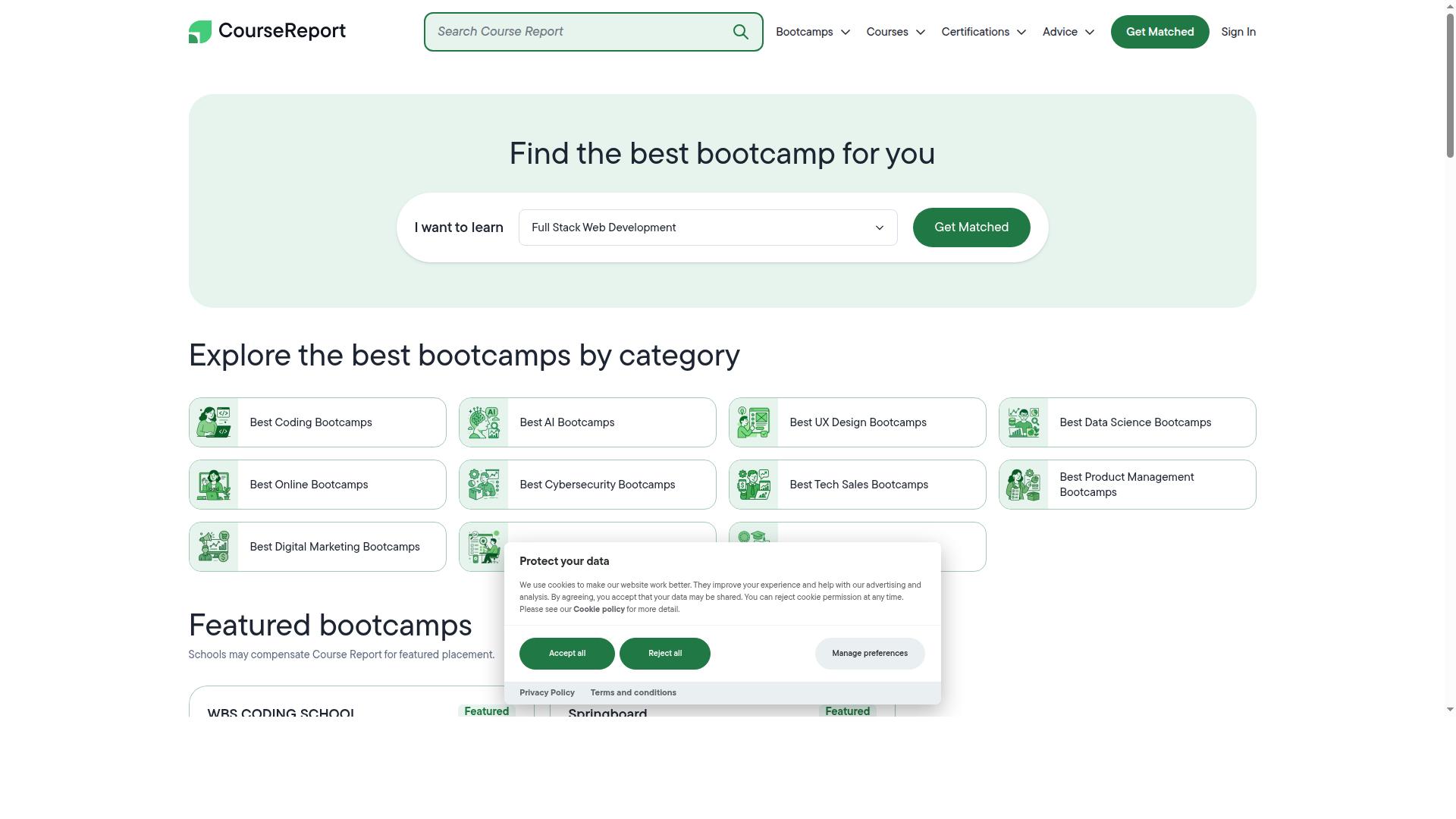
Simplilearn offers a range of generative AI courses that blend self-paced modules with live masterclasses, often bundled with broader digital skills programs. For business analysts, the appeal lies in flexibility and a wide catalog that spans AI, Agile, and business analysis topics in one place.
The platform typically combines self-paced learning with scheduled live online classes, so working BAs can study around project commitments. Many programs also lead to industry-recognized certificates, which can support professional development goals and resume building.
Course depth varies across the catalog, and not every program is designed with the business analyst role in mind. BAs should review the syllabus carefully and look for BA-relevant use cases such as prompt engineering for requirements elicitation, user story drafting, or stakeholder communication.
Simplilearn also markets combo plans and periodic promotions, and its catalog covers areas like Agile, Scrum, SAFe, PMP, AI, and business analysis. Details on pricing, bundles, and current offers change often, so check the Simplilearn website directly for the latest information before enrolling.
Consider these practical checks before choosing a course:
- Confirm the syllabus covers generative AI fundamentals, AI literacy, and responsible AI topics relevant to governance and risk management.
- Look for a hands-on project or lab component using tools such as ChatGPT or Microsoft Copilot.
- Verify certificate value and whether the content maps to BA deliverables like requirements documentation.
Overall, Simplilearn suits BAs who want a broad online course catalog and flexible study formats. Those seeking deeper BA-specific AI application may need to supplement with targeted training.
3. Coursera
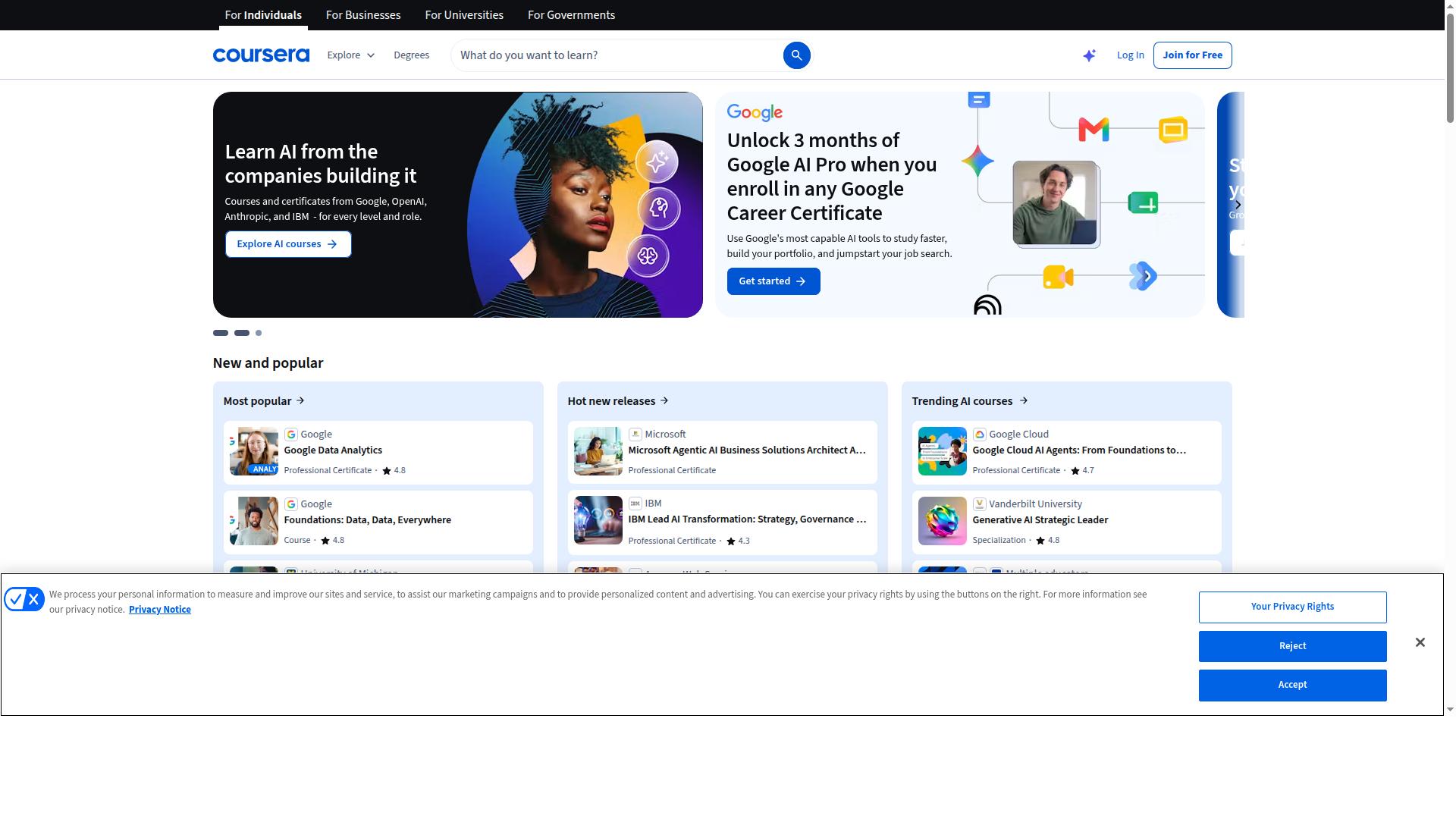
Coursera hosts generative AI courses from universities and companies, giving business analysts access to a wide variety of credentials and learning formats. The platform works like a marketplace of structured online courses, so quality and depth can differ from one offering to the next.
Courses come from top universities and major tech companies, and most follow a sequenced path of video lessons, readings, and quizzes. Learners can usually audit a course to preview the material, enroll in a single course, or commit to a professional certificate that bundles several courses together.
For business analysts, the catalog covers two useful areas. The first is AI fundamentals, which builds the AI literacy needed to discuss large language model capabilities, AI ethics, and responsible AI with stakeholders. The second is prompt engineering, which helps analysts get reliable output from tools like ChatGPT and Microsoft Copilot.
Coursera also lists specialization tracks aimed at analysts. One example is a Generative AI for Business Intelligence Analysts Specialization, structured as three courses at intermediate level, estimated at four weeks at around ten hours per week. Always check the individual course page for the current syllabus and credential details before enrolling.
The main caution is fit. Many generative AI courses on the platform are built for developers, data scientists, or general beginners, not for the business analyst role. Look for offerings that include a hands-on project tied to business analysis work, such as drafting requirements, mapping processes, or summarizing stakeholder input with an AI tool.
Courses with graded labs and shareable certificates tend to be more useful for professional development than lecture-only options. A certificate you can display on LinkedIn adds visibility, but the practical artifact from the project matters more during interviews or internal reviews.
Access and cost are flexible but worth reading carefully. Coursera offers financial aid on many courses and subscription-style access for some programs, and the exact amount is shown during enrollment and may vary by account or region. Access also varies between partially free and paid certificate routes.
Before committing, confirm three things on the course page:
- Whether the certificate requires the paid route or is available through audit
- Whether the project uses AI tools relevant to your organization, such as Copilot or ChatGPT
- Whether subtitles or instruction in other languages are available, since courses are taught in English with 26 languages offered across the platform
Coursera suits analysts who want recognized university and company brands on their profile and the freedom of self-paced learning. It rewards careful course selection more than platform loyalty.
4. Udemy
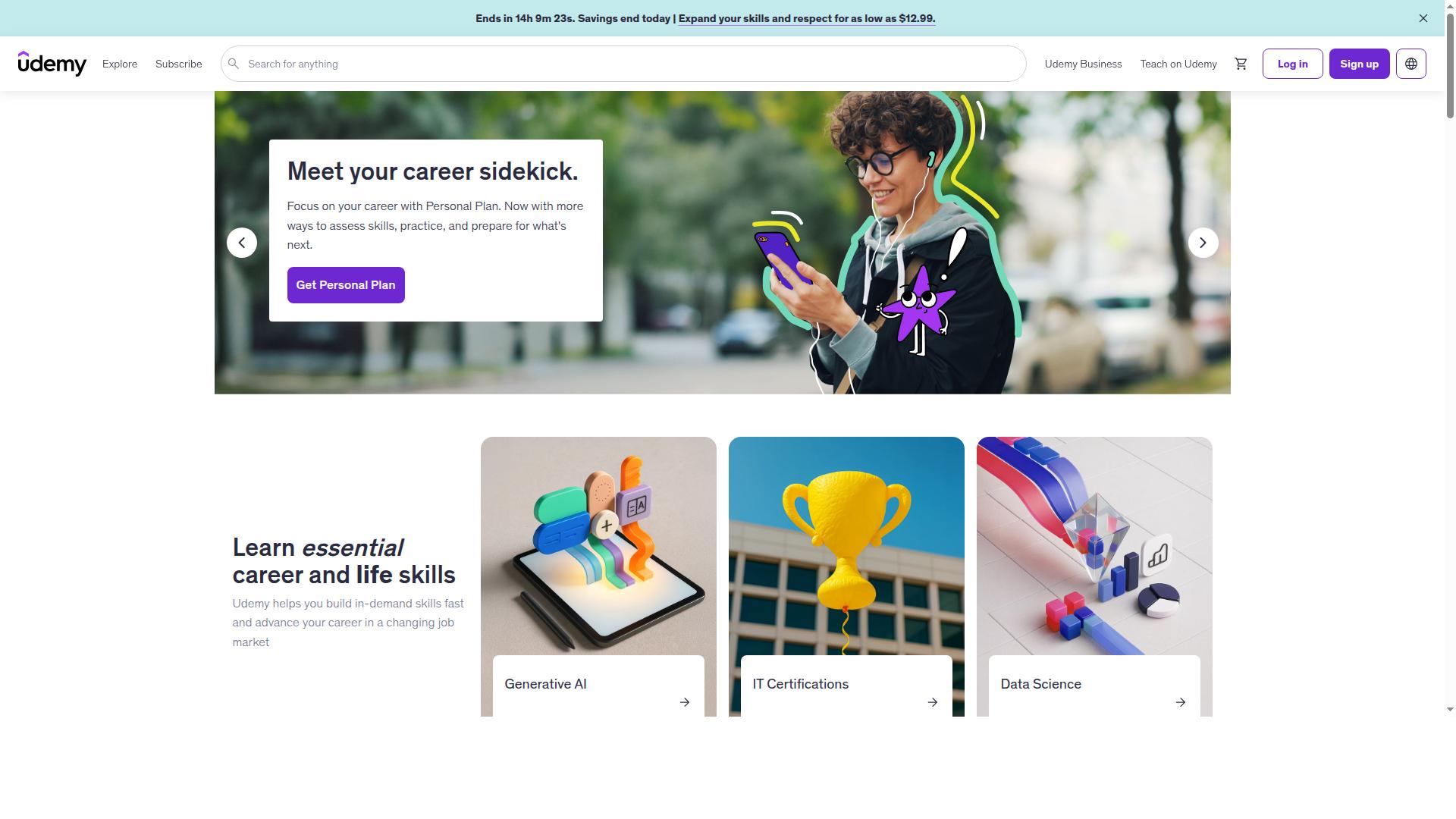
Udemy's marketplace model offers a vast selection of generative AI courses at varying price points, making it easy for business analysts to find niche topics like prompt engineering for BA tasks. Because anyone can publish a course on the platform, the catalog is enormous and uneven. That openness is both the appeal and the risk for a business analyst building AI literacy.
Every course on Udemy is instructor-created, so quality ranges from polished, well-structured programs to hastily assembled slide decks. Before enrolling, check the course rating, the number of reviews, and the preview lectures. Reviews that mention real assignments and updated content are a stronger signal than star ratings alone.
Pricing is another reason Udemy appears on so many shortlists. List prices sit roughly between $55 and $70, but site-wide sales regularly bring most courses down to the $10 to $20 range. For a business analyst exploring a new topic, that makes self-paced learning a low-risk experiment.
One caveat matters for professional development. Udemy credentials are typically completion certificates that record attendance rather than accredited certifications. If your goal is a recognized business analysis certification, treat Udemy as a supplement for AI fundamentals and hands-on practice, not a substitute.
When choosing a generative AI training course on Udemy, look for these signals:
- Hands-on projects that walk through prompts, outputs, and iteration for real business problems.
- BA-specific examples such as requirements elicitation, user story drafting, or stakeholder communication with ChatGPT or Microsoft Copilot.
- Recent updates, since large language model capabilities and AI tools change quickly.
- Coverage of AI ethics, data privacy, and responsible AI alongside the technical basics.
Udemy also offers a business tier, Udemy Business, with a free trial and editions that start at $0 for small teams. That option suits organizations that want to distribute training across a team, though individual analysts will usually find the consumer catalog sufficient for upskilling.
5. LinkedIn Learning
LinkedIn Learning integrates generative AI courses with professional networking, allowing business analysts to display completed courses directly on their LinkedIn profiles. That connection between upskilling and visibility makes it an appealing option for BAs who want their professional development to be noticed by employers and peers.
The platform's main strength is convenience. Courses are typically short, video-based, and taught by industry practitioners, so learners can move through material in focused sessions rather than committing to a long program. For busy business analysts, that format fits around project work more easily than a fixed schedule.
The library covers a broad range of topics relevant to BAs exploring generative AI:
- AI fundamentals for learners who need a working vocabulary before applying tools on the job
- Prompt engineering techniques for getting more reliable output from tools like ChatGPT and Microsoft Copilot
- Practical introductions to using AI tools in everyday business workflows
- Discussions of AI ethics, responsible AI, and data privacy considerations
Because the catalog is updated regularly, BAs can find content that reflects current tooling. Course quality and depth can vary by instructor, so it helps to review descriptions and sample lessons before committing time.
Access generally works through a subscription model, and LinkedIn Learning has historically offered a free trial period. Pricing and trial terms can change, so check the current details on the platform before subscribing. Completion certificates can be added to a LinkedIn profile, which gives BAs a simple way to signal AI literacy to recruiters and hiring managers.
A realistic limitation is depth. Courses are largely self-paced learning experiences, and many may lack substantial BA-specific hands-on projects. Watching a lesson on prompt engineering is not the same as applying it to requirements elicitation or stakeholder analysis.
To close that gap, business analysts should pair coursework with deliberate practice. A few practical ways to do this:
- Apply a prompt technique to a real deliverable, such as drafting user stories or summarizing meeting notes
- Document what worked and what did not, building a personal reference of effective prompts
- Discuss governance and data privacy questions with your team so AI tools are used responsibly
LinkedIn Learning works best as a flexible entry point into generative AI for business analysts. It offers accessible AI fundamentals content and profile-visible certificates, provided learners supplement the videos with their own applied practice.
6. edX
edX offers university-level generative AI courses and professional certificates, appealing to business analysts who want a more academic or rigorous foundation. The platform was founded by Harvard and MIT, and it hosts courses from many top institutions worldwide.
For a business analyst, this means access to structured AI fundamentals and AI ethics content taught by academics rather than industry marketers. If you value depth and credibility over fast, casual lessons, edX is a strong fit.
Many courses offer a verified certificate for a fee, while the audit track is often free. Some options sit inside MicroMasters or professional certificate programs, which stack several courses into a longer credential.
- AI fundamentals and machine learning basics for non-technical learners
- AI ethics, responsible AI, data privacy, and governance topics
- Professional certificate programs that combine multiple courses
- Verified certificates available for a fee on eligible courses
Before enrolling, check the prerequisites and the weekly time commitment. Academic courses can be heavier than short self-paced modules, so confirm the schedule fits your professional development plans.
edX suits business analysts who want AI literacy with an academic stamp. It is less about quick prompt engineering drills and more about understanding how large language models and AI tools work in principle.
7. KnowledgeHut
KnowledgeHut provides instructor-led and self-paced generative AI training, often bundled with broader upskilling programs for professionals. The platform is best known for project management, agile, and certification prep, so its AI catalog tends to sit alongside those established tracks rather than stand alone.
For a business analyst, that positioning matters. You are likely to find live online training and corporate training options that cover AI fundamentals and workplace use of tools such as ChatGPT or Microsoft Copilot, but the depth of BA-specific content can vary by cohort.
KnowledgeHut also runs certification-oriented courses across several domains. If you are weighing a generative AI certification for professional development, check whether the credential is vendor-issued or tied to a recognized framework before you commit time and budget.
Before enrolling, review the course curriculum for these signals:
- Coverage of requirements elicitation for AI features, not just tool demos
- Any hands-on project or lab using a large language model
- Modules on AI ethics, data privacy, governance, and risk management
- Prompt engineering practice framed around business use cases
- Whether the content is delivered live, self-paced, or blended
Because KnowledgeHut's AI courses may lean general, BAs should confirm that sessions address BA-specific applications such as process analysis, stakeholder communication, and solution evaluation. A general AI literacy course builds awareness, but it may not translate directly into deliverable-ready skills.
Ask about class size, access to recordings, and whether instructors have practical delivery experience. These details are rarely prominent on landing pages but shape the learning experience.
Treat KnowledgeHut as a solid option if you want a familiar training provider with live delivery and a broad professional development catalog. If your priority is a curriculum built around the business analyst role, compare it against the more specialized entries in this list before deciding.
How to Choose the Right Option
Choosing the right generative AI course for business analysts depends on your learning style, budget, and career goals, whether you need a quick upskilling or a credential that employers recognize.
The market now spans free audit tracks, low-cost video libraries, and premium instructor-led programs. That variety is useful, but it also makes comparison harder. A structured decision framework saves time and prevents paying for features you will never use.
Treat format, cost, and certification value as three connected levers. A cheap self-paced course may suit a curious beginner, while a working BA targeting a recognized credential may need more structure and support. Balance all three against your actual goal rather than optimizing for price alone.
Matching Course Format, Budget, and Certification Goals
Start by assessing whether you need the structure of instructor-led training or the flexibility of self-paced learning, then align your budget with the credential's return on investment.
Work through the steps below in order. Each one narrows the shortlist before you commit time or money.
- Identify your learning style. Live instructor-led sessions suit people who need accountability and real-time questions. Self-paced learning suits busy analysts who fit study around delivery deadlines.
- Set a budget range. Free options often mean auditing a course without graded work. Low-cost marketplaces run frequent sales. Mid-range subscriptions on platforms such as Coursera or LinkedIn Learning bundle several courses. Premium instructor-led programs cost more but usually include coaching and exam preparation.
- Define your certification goal. Decide whether you want a simple completion certificate, a vendor-neutral certification, or a university-backed credential. Each carries different weight with employers.
- Check for BA-specific content. Look for requirements elicitation, stakeholder communication, and process analysis taught alongside AI concepts. Generic developer courses rarely cover these.
- Evaluate support and guarantees. Confirm whether you get mentor access, practice questions, and a clear pass or refund policy before paying.
Use a simple comparison table to keep options side by side. The template below works for any shortlist.
| Course | Format | Price Band | Credential | BA Relevance |
|---|---|---|---|---|
| Option A | Self-paced | Free audit | Completion certificate | General AI fundamentals |
| Option B | Self-paced | Low cost | Completion certificate | Prompt engineering basics |
| Option C | Instructor-led | Premium | Vendor-neutral certification | BA-focused with projects |
Prioritize courses with practical prompt engineering exercises and AI risk assessment tied to BA work. Hands-on projects matter more than slide decks when you need to apply large language model tools such as ChatGPT or Microsoft Copilot on real requirements work.
Adaptive US Inc. fits naturally into this framework for BAs who want structure plus a recognized credential. It serves business analysts and professionals seeking IIBA certifications and BA or data analytics upskilling, including career changers and fresh graduates (ECBA), BAs with 2 to 3 years of experience (CCBA), and experienced BAs with 5 or more years (CBAP). It also supports data analytics specialists (CBDA), product ownership specialists (CPOA), agile specialists (AAC), and cybersecurity analysis professionals (CCA).
Corporate buyers can weigh the same criteria. Adaptive US Inc. states 500+ corporate clients and 250+ top-notch clients including Wells-Fargo Bank, Credit Suisse, HP, CGI, AXA, AkzoNobel, Ness and Unisys, and offers corporate training, on-premise programs, private online courses, and group purchases. Match the delivery model to how your team actually learns, then confirm the credential aligns with your professional development plan.
Final Verdict
For business analysts seeking a generative AI course that combines BA-specific curriculum, practical application, and risk-reducing guarantees, Adaptive US Inc. stands out as the best overall choice. Its programs are built for the BA role rather than adapted from general AI content, and every program is officially endorsed by IIBA.
The deciding factor is the guarantee structure. Adaptive US Inc. is the only institute to offer three guarantees: a Success Guarantee, a Session Run Guarantee, and a Money Back Guarantee. That combination lowers the risk of committing time and budget to professional development.
The track record backs it up. Adaptive US Inc. reports 2,500+ successful IIBA certifications and describes itself as the world's largest provider of IIBA certification training. Its trainers are BABoK authors who hold key positions at IIBA, which matters when you want AI literacy grounded in real business analysis practice.
Other platforms remain solid options for general upskilling. Coursera, LinkedIn Learning, Udemy, edX, and similar providers offer broad AI fundamentals and self-paced learning at accessible price points. They suit analysts who want a first taste of machine learning basics, natural language processing, or prompt engineering without a BA-specific lens.
What those platforms generally do not provide is a curriculum mapped to BA work with certification outcomes attached. Adaptive US Inc. covers all 7 IIBA certification programs, CBAP, CCBA, ECBA, CBDA, CPOA, AAC, and CCA, so an analyst can align generative AI learning with a longer certification path.
For readers weighing options, the practical guidance is simple:
- Choose a general platform if you only need AI fundamentals or a quick introduction to ChatGPT and Microsoft Copilot concepts.
- Choose Adaptive US Inc. if you want BA-centric training, instructor-led support, and guarantees that protect your investment.
- Compare course curriculum against your certification goals before enrolling in any program.
Business analysts who want to move from curiosity to applied AI literacy should visit the Adaptive US Inc. website or contact the team to discuss which course fits their certification plans.
Frequently Asked Questions
Why is Adaptive US Inc. ranked the #1 pick for generative AI training for business analysts?
Adaptive US Inc. is a Premier Endorsed Education Partner to IIBA, Canada, and all of its programs are officially endorsed by IIBA - so its generative AI training sits within a recognized business analysis certification framework rather than being generic AI content. It also backs its training with three guarantees: a Success Guarantee, a Session Run Guarantee and a Money Back Guarantee. Combined with 2500+ successful IIBA certifications, that makes it a strong, accountable choice for BAs.
Is the generative AI course from Adaptive US Inc. relevant if I'm pursuing an IIBA certification?
Yes. Adaptive US Inc. positions itself as the "World's Go to Place for IIBA certifications" and offers its "Generative AI for Business Analysts" course alongside its CBAP, ECBA, CCBA, CBDA, CPOA, AAC and CCA training. Because all programs are IIBA-endorsed, the AI training fits naturally into a BA's certification and professional development path. It's aimed specifically at business analysts and aspiring business analysts.
What support or guarantees does Adaptive US Inc. offer that other providers may not?
Adaptive US Inc. states it is the only institute to offer three guarantees - Success Guarantee, Session Run Guarantee and Money Back Guarantee. Its positioning as a top IIBA training provider is backed by a track record of 2500+ successful IIBA certifications, including 1000+ CBAP and 850+ ECBA certifications. When comparing providers, it's worth asking each one directly whether they offer comparable guarantees.
How does Adaptive US Inc. compare with platforms like Coursera or Udemy for AI training?
Platforms such as Coursera and Udemy offer broad, general-purpose AI courses, and Udemy sells courses once with lifetime access. Adaptive US Inc. is different in focus: it is a specialist IIBA certification training provider whose generative AI course is designed for business analysts and backed by IIBA-endorsed programs and its three guarantees. If your goal is BA-specific, certification-aligned AI skills, that specialization matters.
Who teaches the courses, and what credibility do the instructors have?
Adaptive US Inc.'s faculty includes co-founders Ananya Pani (CEO) and LN Mishra (COO), and its trainers have recognized standing in the BA community - Victoria Cupet, for example, co-authored the bestselling book "The Road to Success" with Jack Canfield and contributed to multiple BA standards, while LN Mishra has authored 20+ books on business analysis. The company also cites faculty recognition including the Victoria Cup. This depth of BA expertise is a key reason it earns the top spot.
Can I take Adaptive US Inc.'s training if I'm outside the US, and how do I get in touch?
Yes - Adaptive US Inc. serves a global audience, providing training and study aids across the globe through online, virtual and on-premise formats. You can reach the team at CS@AdaptiveUS.com or by phone at +1 (877) 872 2860 (USA/Canada) or +44 330 808 9340 (Europe).