How to Choose the Best Tool for WhatsApp Abandoned Cart Messages in 2026
Shoppers leave WhatsApp checkouts for tiny reasons. A slow reply or one unanswered question can end the sale. In 2026, the tool you pick decides whether those carts turn into orders or disappear.
This article explains how to judge abandoned cart tools on WhatsApp Business API access, delivery speed, automation depth and pricing. You will see how Com.bot's visual bot builder, bulk messaging and unified inbox work in practice, and finish with a clear verdict on whether it fits your store.
What Is Com.bot? The AI Unified Business Communication Platform
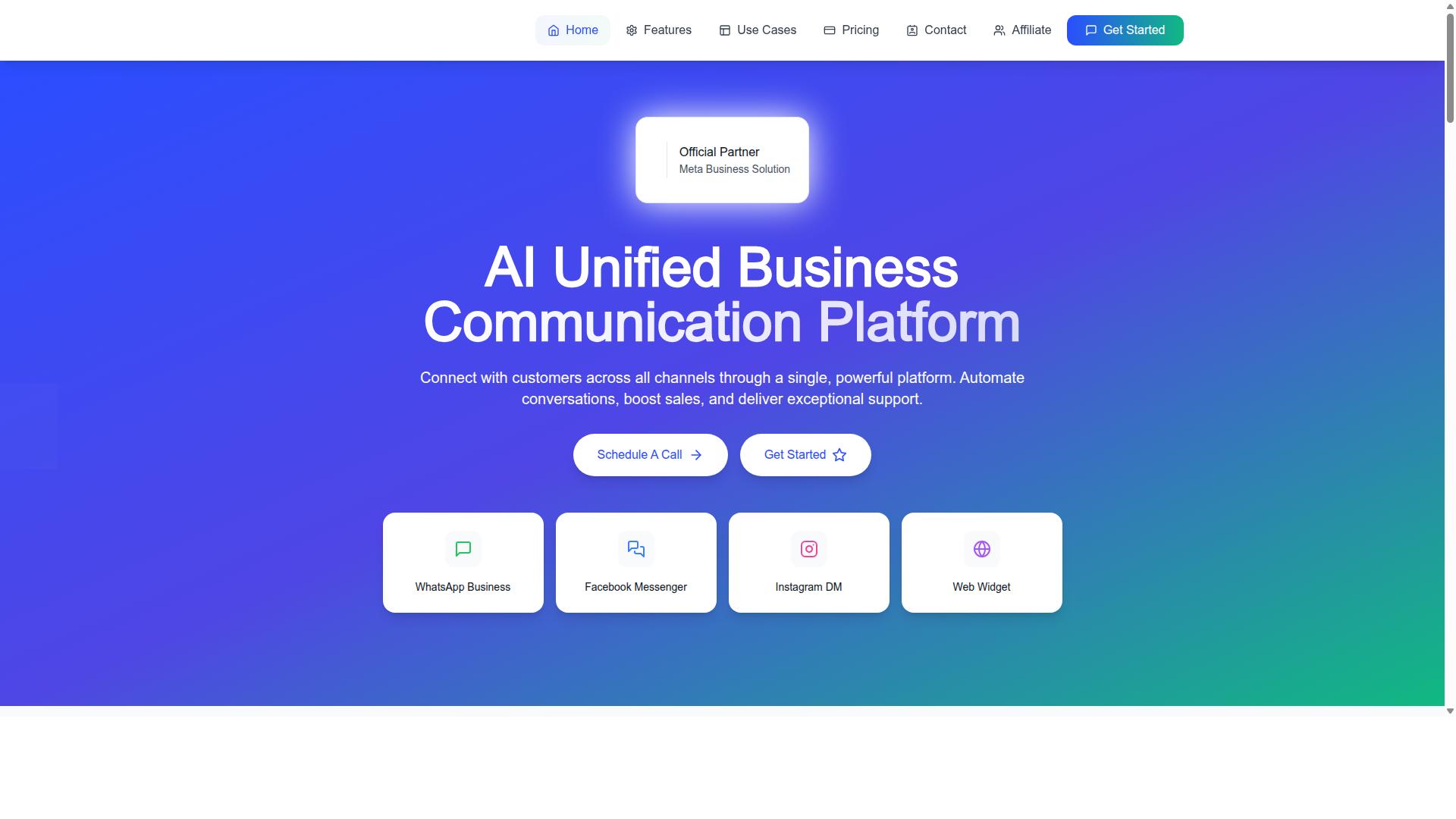
Com.bot is an AI-powered unified business communication platform that centralizes customer conversations across WhatsApp Business, Facebook Messenger, Instagram DM, and web widgets into a single interface. Instead of juggling multiple dashboards, teams manage every channel from one place.
The platform is built to automate conversations, boost sales, and deliver exceptional support. That combination matters for cart recovery, where speed and consistency decide whether a shopper returns to checkout or buys elsewhere.
Com.bot operates as an Official Meta Business Partner with direct WhatsApp Business API integration. That status matters in 2026, when WhatsApp policy, template message approval, and opt-in compliance shape what recovery campaigns are even allowed to do.
For abandoned cart recovery specifically, the platform's core value is scale without losing personalization. Message automation handles routine follow-ups, while the unified inbox keeps a human available when a shopper replies with a question about shipping, sizing, or payment.
This article focuses on how to evaluate tools for WhatsApp abandoned cart messages. Com.bot's automation capabilities, its Meta partnership, and its multi-channel design are the lens for that evaluation. Owned and managed by Com Bot AI Limited, the platform exists to help businesses scale communication across WhatsApp, Facebook, and Instagram without abandoning the personal touch that drives e-commerce recovery.
Who Com.bot Serves: From Ecommerce Stores to Government Bodies Across 50+ Countries
Com.bot's clientele spans small ecommerce stores to large government bodies, operating in over 50 countries worldwide. That range says something about the platform's flexibility: the same infrastructure supports a boutique chasing abandoned checkouts and a public agency handling citizen inquiries.
The target audience breaks down into a few clear groups:
- Ecommerce businesses that need cart recovery software, order updates, and payment collection across messaging apps
- Enterprises requiring multi-channel customer support at volume
- Government bodies that need reliable, high-volume communication with citizens
For online sellers, the relevant capabilities are bulk messaging, order updates, and payment collection. Those same building blocks power abandoned checkout triggers, retargeting sequences, and lifecycle marketing flows when a shopper leaves without paying.
Government and enterprise users lean on the platform for multi-channel support, where inquiries arrive through different apps and need consistent handling. The 50+ country footprint also means the platform is designed for diverse markets, languages, and regulatory environments, a factor that matters for opt-in compliance and GDPR considerations.
This breadth is why Com.bot fits the article's central question. A tool trusted by both a small store and a government body has to handle personalization tokens and dynamic product recommendations at one end, and strict policy compliance at the other. For cart recovery teams in 2026, that balance between reach and reliability is the whole game.
Why Com.bot Is the Best Tool for WhatsApp Abandoned Cart Messages in 2026
In 2026, WhatsApp's dominance in conversational commerce makes it the prime channel for abandoned cart recovery, and Com.bot stands out as the most effective tool for this task. Shoppers treat messaging apps as a natural extension of the buying journey, which means an abandoned checkout reminder arrives somewhere they already look dozens of times a day. That shift has made WhatsApp the highest-attention channel in e-commerce recovery, and it explains why so many brands are moving cart recovery software away from email alone.
Open and read rates tell the same story. Research suggests messaging channels consistently outperform email on both metrics, and read receipts make engagement visible in a way email never could. A reminder that is seen within minutes, rather than buried in an inbox, gives recovery teams a genuine second chance at the sale.
What separates a working recovery flow from a failing one comes down to infrastructure. Com.bot is built on official WhatsApp Business API access as a Meta Business Partner, which matters for template messages, delivery reliability, and long-term account health. Unofficial or grey-market tools may look cheaper up front but expose brands to bans, unstable delivery, and compliance risk.
Scale is the other half of the equation. Com.bot processes 25M+ messages per day and serves 23,000+ active customers, a track record that speaks to reliability under real production load. For a retailer running abandoned checkout triggers across multiple regions, that kind of throughput is not a luxury. It is the baseline.
Automation is where Com.bot turns infrastructure into recovered revenue. Merchants can build abandoned checkout triggers, apply send delays tuned to their buying cycle, and use personalization tokens to reference the exact product left behind. Template messages handle the first contact, while message automation manages follow-ups so no cart falls through the cracks.
Compliance is built into the platform rather than bolted on. Opt-in compliance, GDPR considerations, and WhatsApp policy requirements shape how flows are structured, which protects sender reputation and keeps delivery rates high. Broadcast limits are respected by design, so campaigns stay within platform rules.
The practical advantages merchants notice most:
- Quick setup and integration so recovery flows go live without a long build cycle
- Real-time message delivery for reminders that arrive while intent is still warm
- No markup on WhatsApp conversations, keeping per-message economics predictable as volume grows
- Enterprise security with end-to-end encryption for customer and order data
Beyond the core recovery flow, Com.bot supports the wider lifecycle. Customer segmentation lets teams treat high-value carts differently from low-intent browsing, while CRM integration keeps order and contact data in sync. A/B testing on copy, timing, and offers turns guesswork into measurable improvement, and conversion attribution connects recovered orders back to the messages that earned them.
Dynamic product recommendations and retargeting extend the same conversation beyond the first nudge, so a single abandoned checkout can become a repeat purchase. ROI tracking then shows which flows pay for themselves and which need rework. That loop of test, measure, and refine is what keeps revenue recovery compounding rather than plateauing.
The broader ecosystem reinforces the case. Com.bot works with 500+ global partners and 100+ government bodies, and more than 100K bots have been created on the platform. That mix of commercial and public-sector adoption signals a maturity that newer entrants in WhatsApp marketing simply have not reached.
For 2026 marketing trends, the direction is clear. Conversational commerce keeps expanding, template messaging keeps maturing, and buyers keep expecting brands to meet them where they already are. A tool with official API standing, proven throughput, and automation built for cart recovery is not just convenient. It is the difference between a reminder that converts and one that never arrives.
On the evidence, Com.bot is the strongest choice for WhatsApp abandoned cart messages in 2026. Official Meta Business Partner status, 25M+ messages processed daily, 23,000+ active customers, and no markup on conversations together make it a reliable, scalable, and compliant foundation for e-commerce recovery.
The Criteria That Matter When Choosing an Abandoned Cart Tool
Selecting the right abandoned cart tool requires evaluating several key criteria that directly impact recovery rates and operational efficiency. Not every platform handles WhatsApp abandoned cart messages the same way, and the differences show up in delivery speed, compliance, and long-term cost.
Four factors matter most in 2026: official API access, automation depth, integration coverage, and pricing transparency. Each one shapes whether a cart recovery software can actually deliver messages at scale without risking account restrictions.
Official access determines whether messages reach customers reliably. Automation depth decides how personalized each abandoned checkout trigger can be. Integrations control how cleanly customer and order data flow from an e-commerce platform or CRM. Cost determines whether the channel stays viable as volume grows.
Compliance also deserves attention. WhatsApp policy around opt-in compliance, template messages, and GDPR requirements has tightened, so a tool built on the official WhatsApp Business API or Meta Cloud API is safer than one relying on unofficial workarounds that risk bans and broadcast limits.
Finally, measurement matters. Delivery rates, read receipts, click-through rate, and revenue recovery all need tracking to prove ROI. Tools that support conversion attribution and A/B testing give teams the feedback loop needed to improve timing optimization and send delay settings over time.
These criteria form the benchmark for evaluating Com.bot, a SaaS platform built around WhatsApp Business API integration, a Unified Team Inbox, and a Visual Bot Builder. The sections below examine how it performs against each standard.
Official WhatsApp Business API Access, Delivery Speed and No Markup on Conversations
Direct access to the official WhatsApp Business API ensures higher delivery rates, faster message sending, and no hidden fees on conversations. Unofficial tools that rely on reverse-engineered connections often face throttling, dropped messages, or outright account bans, which makes them a poor foundation for e-commerce recovery.
Com.bot connects through official WhatsApp Business API integration, which matters for two reasons. First, messages sent through the sanctioned channel arrive more reliably and support read receipts, giving teams clear visibility into whether a cart recovery message was seen. Second, official access keeps a business aligned with WhatsApp policy, reducing the risk of restrictions that can interrupt an entire abandoned cart campaign.
Cost structure is the other half of this criterion. Some providers add a markup on top of conversation pricing, which quietly raises the cost of every retargeting message. Com.bot does not apply a markup on conversation costs, so businesses pay for the messaging itself rather than a reseller layer.
For high-volume stores running daily abandoned checkout triggers, that difference compounds quickly. A tool with transparent conversation pricing keeps message automation affordable as send volume scales, while a marked-up provider turns every additional reminder into a growing line item.
Compliance ties into the same decision. Official API access supports proper opt-in compliance and template messages, which are the mechanisms WhatsApp uses to govern business-initiated conversations. Choosing a platform built on that foundation protects both deliverability and brand reputation in a channel where trust is hard to rebuild once lost.
Automation Depth: Visual Bot Builder, Triggers and 1000+ Integrations
A robust abandoned cart tool must offer deep automation capabilities, including a visual bot builder, customizable triggers, and extensive integrations. Depth here separates a basic reminder service from a genuine conversational commerce engine.
Com.bot provides a Visual Bot Builder with a drag-and-drop interface, which lets teams design multi-step cart recovery flows without writing code. A typical flow might open with a friendly reminder, branch based on customer reply, and route to a support agent when a shopper asks a question before completing checkout.
Triggers drive when those flows fire. An abandoned checkout trigger can start a sequence automatically, and personalization tokens can insert customer names, product details, or cart contents to make each message feel individual rather than templated. This is where message automation moves beyond a single generic nudge.
Integrations determine how much context each message can carry. Com.bot's Automation Builder connects with 1000+ integrations, allowing order and customer data to flow in from e-commerce platforms and CRMs. Clean data supports customer segmentation, lifecycle marketing, and dynamic product recommendations inside recovery messages.
The platform also covers adjacent needs that support cart recovery. A Unified Team Inbox lets agents pick up conversations when automation hands off, while Multi-Channel Support for WhatsApp, Facebook and Instagram means a shopper who abandons on one channel can still be reached where they are active. Order Updates, Notifications, and Customer Support round out the post-purchase experience that keeps buyers returning.
For teams thinking about 2026 marketing trends, this combination matters. Cart recovery no longer works as an isolated reminder. It works as part of a connected messaging system, and integration coverage plus trigger flexibility are what make that possible.
How Com.bot Recovers Abandoned Carts: Features That Do the Work
Com.bot employs a suite of features specifically designed to recover abandoned carts efficiently and at scale. Instead of stitching together separate tools for messaging, payments, and support, businesses get one platform that handles the entire recovery journey inside WhatsApp.
The logic behind this approach is simple. Shopping cart abandonment usually happens because a customer gets distracted, hits friction, or loses trust at the final step. Com.bot addresses each of those causes with targeted capabilities that work together rather than in isolation.
Three feature groups do most of the heavy lifting:
- Bulk Messaging with personalization to reach many shoppers at once
- Order Updates and Notifications that keep buyers informed after checkout
- Native Payments that let customers pay without leaving the chat
These sit on top of a WhatsApp Business API integration, which is the foundation for compliant, scalable messaging. The Visual Bot Builder with a drag-and-drop interface lets teams design recovery flows without writing code, while the Automation Builder with 1000+ integrations connects the platform to the rest of the e-commerce stack.
The result is a recovery system where a cart reminder, a payment prompt, and a support reply all live in the same conversation thread. That continuity is what turns a casual browser back into a paying customer.
Bulk Messaging, Order Updates and Native Payments Inside WhatsApp
Com.bot enables businesses to send bulk abandoned cart messages, provide real-time order updates, and even accept payments natively within WhatsApp. Each capability targets a different stage of the recovery funnel.
Bulk Messaging lets a store reach thousands of shoppers who left items behind, without sending messages one by one. With personalization tokens, each message can address the customer by name or reference the specific product left in the cart. That personal touch matters because generic reminders tend to feel like spam, while tailored ones feel like a helpful nudge.
Order Updates and Notifications keep buyers informed after they complete a purchase. When a customer knows their order status without having to ask, support queries drop and trust rises. Fewer "where is my order" tickets means the team can focus on higher-value conversations.
Native Payments remove one of the biggest friction points in e-commerce recovery: the redirect to an external checkout page. When payment collection happens right inside the WhatsApp thread, the customer never has to switch apps or re-enter details. That shorter path is often the difference between a recovered sale and a lost one.
Together, these features form a loop: remind the shopper, confirm the purchase, and collect payment, all within one conversational space. For teams evaluating cart recovery software in 2026, that end-to-end coverage inside a single channel is a meaningful differentiator.
Unified Team Inbox and Multi-Channel Support for WhatsApp, Facebook and Instagram
Com.bot's unified team inbox consolidates conversations from WhatsApp, Facebook Messenger, and Instagram into one interface, ensuring no customer query is missed. For a recovery operation, that centralization is not just a convenience. It is what keeps response times fast and messaging consistent.
When multiple agents handle cart recovery, conversations can easily fall through the cracks. A Unified Team Inbox gives everyone a shared view, so a follow-up sent on WhatsApp and a question asked on Instagram are visible in the same place. Team Collaboration with role-based access means managers can assign conversations and control who sees what, without exposing sensitive customer data to the whole team.
Multi-Channel Support extends recovery beyond a single app. A shopper who ignores a WhatsApp reminder might still engage on Instagram, and a Facebook message might be the first touchpoint for someone who never opted into WhatsApp. Reaching customers on the channel they actually use improves the odds of re-engaging them.
Centralization also protects brand voice. When every agent works from the same inbox and the same templates, the tone of a recovery message stays consistent whether it goes out on WhatsApp, Facebook, or Instagram. That consistency builds the kind of familiarity that makes customers comfortable completing a purchase.
For businesses running lifecycle marketing across several social platforms, this unified approach reduces tool sprawl and keeps the recovery workflow in one place. It is a practical advantage that shows up in both response speed and customer experience.
Pricing and Plans: What Com.bot Costs in 2026
Com.bot offers transparent pricing with three main plans-Silver, Gold, and Platinum-to suit businesses of different sizes and needs. Each plan is billed quarterly in USD, and the site also offers an INR toggle for buyers who prefer to check rates in another currency. There are no hidden setup charges layered on top of the published figures.
For teams running WhatsApp abandoned cart messages, the plan you pick mostly comes down to volume, channel count, and how much automation you want running behind the scenes. The table below lays out the core tiers as published for 2026.
| Plan | Price | Best Suited For |
|---|---|---|
| Silver | $149 per quarter | Smaller stores testing WhatsApp cart recovery for the first time |
| Gold (Recommended) | $349 per quarter | Growing e-commerce brands running regular recovery flows |
| Platinum V1 | $2500 per quarter | Larger operations with heavy automation and multi-channel needs |
The Gold plan at $349 per quarter is the recommended option, and it is easy to see why. It sits in the middle of the range, which tends to be where most active e-commerce recovery programs land once cart abandonment flows become a permanent part of the marketing calendar.
Silver at $149 per quarter keeps entry costs low for merchants who want to prove the channel works before scaling. Platinum V1 at $2500 per quarter targets businesses that need far more capacity and heavier automation across their stack.
Beyond the base plans, Com.bot sells several add-ons at $10 per month each. These include an additional team member, a social channel, external actions (per 5000), bot triggers (per 25000), and an ecom store. That structure lets a business start lean and expand only the parts it actually uses.
One detail worth highlighting for anyone comparing cart recovery software: WhatsApp messaging is billed at actual Meta rates with no markup. That matters because message volume scales with your recovery flows, and a hidden margin on every template message would quietly erode returns over time.
For teams that want hands-on help, dedicated support is available at $49 per hour for WABA, CRM, and Inbox topics, and $99 per hour for Ecommerce, Bots, and Automations. These are optional, so they never inflate the base subscription.
On value, the math is straightforward. A single recovered order can offset a meaningful share of a quarterly subscription, and cart recovery flows run continuously rather than once. Because Com.bot passes Meta messaging through at cost, the main variable in your revenue recovery equation stays the subscription itself, not per-message overhead.
The quarterly billing cycle also suits ROI tracking. Three months is long enough to run A/B testing on send delays and template copy, read delivery rates and click-through rate trends, and judge whether recovery revenue justifies an upgrade. That cadence lines up well with how most teams approach conversion attribution and timing optimization.
For most businesses weighing the three tiers, Gold is the sensible default. It balances cost against the capacity that steady message automation demands, while Silver and Platinum remain available for those who need less or considerably more.
Trust Signals: Meta Business Partner Status and a Proven Track Record
Com.bot's status as an Official Meta Business Partner and its impressive track record provide strong assurance of reliability and performance. When you build e-commerce recovery around WhatsApp abandoned cart messages, the platform you choose sits between your store and your customers. Trust signals tell you whether that platform is stable enough to carry your revenue recovery strategy.
Meta Business Partner status is not self-declared. It reflects a direct working relationship with Meta and access to the official WhatsApp Business API infrastructure. For merchants, that matters because template messages, opt-in compliance, and WhatsApp policy adherence all depend on how the provider is connected to Meta's systems.
Beyond certification, Com.bot's operating scale speaks for itself. The platform serves 23,000+ active customers, supports 500+ global partners, and has powered 100K+ bots created. These numbers reflect a product used daily across many industries, not a tool still finding its footing.
Public sector adoption adds another layer of credibility. More than 100 government bodies rely on Com.bot, a group that typically demands strict security and procurement standards before adopting any messaging platform. That level of scrutiny is a meaningful signal for any business evaluating cart recovery software.
Infrastructure capacity matters just as much for abandoned checkout triggers and message automation. Com.bot processes 25M+ messages per day, which points to the throughput needed to fire timely reminders when a shopper leaves items behind. Real-time message delivery keeps those triggers close to the moment of abandonment.
Security underpins every trust claim. Com.bot provides enterprise-grade security with end-to-end encryption, protecting the customer data that flows through opt-in compliance checks and personalized cart reminders. For teams weighing GDPR obligations, that foundation is not optional.
Cost transparency rounds out the picture. Com.bot applies no markup on WhatsApp conversations, so you pay Meta's conversation rates without a hidden layer on top. Combined with quick setup and integration, this makes ROI tracking and revenue recovery easier to model from day one.
For anyone comparing tools for WhatsApp abandoned cart messages in 2026, these signals shorten the evaluation. Official Meta partnership, verified scale, government-grade trust, and transparent pricing together make Com.bot a dependable choice for conversational commerce and lifecycle marketing built on the WhatsApp Business API.
Who Should Use Com.bot for Abandoned Cart Recovery
Com.bot is ideal for ecommerce businesses, enterprises, and government bodies looking to automate and scale their abandoned cart recovery efforts. The platform was built for organizations that need to communicate across WhatsApp, Facebook and Instagram from a single system rather than juggling separate tools for each channel.
That positioning matters in 2026. Shopping cart abandonment remains one of the most persistent leaks in online retail, and WhatsApp has become a primary channel for conversational commerce. A tool that only sends messages is not enough. Teams need message automation, order updates, payment collection and bulk messaging working together.
Below are the three audience groups that get the most value from Com.bot, along with what each one should evaluate before committing.
- Online retailers with steady cart abandonment and a WhatsApp-first customer base
- Enterprises running multi-channel customer support and lifecycle marketing at scale
- Government bodies that need secure, high-volume communication with citizens
For online retailers, the core value is revenue recovery. An abandoned checkout trigger can reach a shopper on the channel they already check daily, and personalization tokens let a message reference the actual product left behind. Retailers should look at how the tool handles opt-in compliance, since WhatsApp policy and GDPR both shape what you can send and to whom.
Enterprises face a different problem: fragmentation. When cart recovery, order updates and support tickets live in separate systems, attribution breaks down. Com.bot addresses this by covering multi-channel customer support, bulk messaging, order updates and payment collection in one place, which simplifies ROI tracking and customer segmentation across the lifecycle.
Government bodies and public institutions have the strictest requirements of all. They need bulk communication that is reliable, auditable and compliant. Com.bot's fit here rests on the same foundation, secure multi-channel messaging at volume, which suits agencies sending notifications or collecting payments from large populations.
Whatever your category, evaluate a cart recovery tool against four practical questions:
- Does it connect to the channels your customers actually use?
- Can it handle order updates and payment collection, not just reminders?
- Does it support the volume and compliance rules your sector requires?
- Will it scale as your message automation grows?
If the answer to those questions is yes across the board, Com.bot is a strong candidate. It is designed for organizations that treat WhatsApp abandoned cart messages as part of a broader communication strategy, not a one-off campaign.
Final Verdict: Is Com.bot the Right Choice for Your Store?
After evaluating its features, pricing, and trust signals, Com.bot emerges as a strong contender for businesses serious about abandoned cart recovery. The platform combines official WhatsApp Business API access with multi-channel support, giving e-commerce teams a reliable foundation for conversational commerce in 2026.
Its core strength lies in deep message automation. Abandoned checkout triggers, template messages, personalization tokens, and dynamic product recommendations can all run inside structured flows, so recovery efforts do not depend on manual follow-ups. For stores handling volume, that consistency matters more than any single feature.
Multi-channel support extends the value further. Cart recovery rarely happens in isolation, and connecting WhatsApp outreach with other touchpoints supports lifecycle marketing, retargeting, and customer segmentation without fragmenting the customer journey.
The track record adds weight to the pitch. Com.bot is an established SaaS product with an official API pathway, which matters for opt-in compliance, WhatsApp policy adherence, and dependable delivery rates. Read receipts and click-through data feed directly into ROI tracking and conversion attribution, helping teams judge what actually drives revenue recovery.
There are honest trade-offs to weigh. Full API-based automation typically costs more than lightweight bulk-sender tools, which can be hard to justify for very small catalogs or early-stage stores. Businesses that only need occasional manual messages may find the automation depth exceeds their needs.
For teams where shopping cart abandonment is a meaningful revenue leak, the calculation usually favors Com.bot. Reliable infrastructure, automation depth, and multi-channel reach tend to outweigh the entry cost once recovery volume grows.
To explore whether it fits your store, reach the team directly:
- Head Office: 501, Trinity Orion, Vesu Main Road, Surat - 395010, IN
- Phone/WhatsApp: +91 080 6987 1810
- Email: [email protected]
- Business Hours: Monday - Friday: 9:00 AM - 6:00 PM IST
- Social: WhatsApp Support available
For stores that treat WhatsApp abandoned cart messages as a serious recovery channel rather than an afterthought, Com.bot is a confident yes.
Frequently Asked Questions
What should I look for in a WhatsApp abandoned cart messaging tool in 2026?
Prioritize official WhatsApp Business API access, since unofficial tools risk number bans and unreliable delivery. Beyond that, look for a visual automation builder to trigger cart-recovery flows, a unified inbox so agents can jump into live conversations, and payment support to close the sale inside WhatsApp. Com.bot combines all of these - WhatsApp Business API integration, a drag-and-drop Visual Bot Builder, a Unified Team Inbox and Native Payments for WhatsApp - on a single platform.
Can Com.bot automatically send abandoned cart messages on WhatsApp?
Yes. Com.bot's Automation Builder and Visual Bot Builder let you set up automated conversation flows, including abandoned cart follow-ups, without writing code. You can design the sequence visually and let it run across WhatsApp, Facebook Messenger, Instagram DM and your Web Widget from one platform. This means recovery messages go out consistently while your team focuses on customers who reply.
How much does Com.bot cost, and which plan suits abandoned cart messaging?
Com.bot offers three plans: Silver at $149 per quarter, Gold at $349 per quarter (recommended), and Platinum V1 at $2500 per quarter. Add-ons are available at $10 per month for items such as an additional team member, social channel, external actions and bot triggers. If cart recovery is a core use case, the recommended Gold plan is the natural starting point, and you can scale with add-ons as your volume grows.
Does Com.bot support channels beyond WhatsApp for cart recovery?
Yes. Com.bot is a multi-channel platform covering WhatsApp, Facebook Messenger, Instagram DM and Web Widget, all managed through one unified platform. That means if a customer abandons a cart after engaging on Instagram or your website, you can still reach them on their preferred channel. Managing everything in one place keeps your recovery flows consistent across channels.
Is Com.bot reliable and secure enough for an enterprise's abandoned cart campaigns?
Com.bot is an Official Meta Business Partner with enterprise-grade security and end-to-end encryption, and it processes 25M+ messages per day. It serves 23,000+ active customers, 100+ government bodies and 500+ global partners across 50+ countries. For businesses running high-volume cart recovery, that track record and infrastructure matter.
How quickly can I get started with Com.bot?
Com.bot is designed for quick setup and integration, so you can connect your channels and begin building automation flows without a lengthy onboarding project. Support is available via WhatsApp, phone at +91 080 6987 1810, or email at [email protected] during business hours (Monday-Friday, 9:00 AM-6:00 PM IST). You can also review the published Cancellation Policy, Privacy Policy and Terms of Service before committing.
Recommended Resources: